Industry note · Computing infrastructure
A computing city on the grassland: the data centres of Ulanqab's Chahar High-tech Zone | Singapore Global International
From potato country to computing city: one road, fifteen minutes, thirty-plus data centres.
A computing city on the grassland
Drive some 300 kilometres north-west of Beijing into Ulanqab, Inner Mongolia. This was once prime potato and oat country; today, a fifteen-minute drive along one road in the Chahar High-tech Development Zone passes more than thirty corporate data centres in succession — Huawei, Apple, Alibaba, Kuaishou, UCloud, ByteDance, zDATA, GDS and 21Vianet among them. People have started calling it China's computing-power city.
1. It started with Huawei in 2013
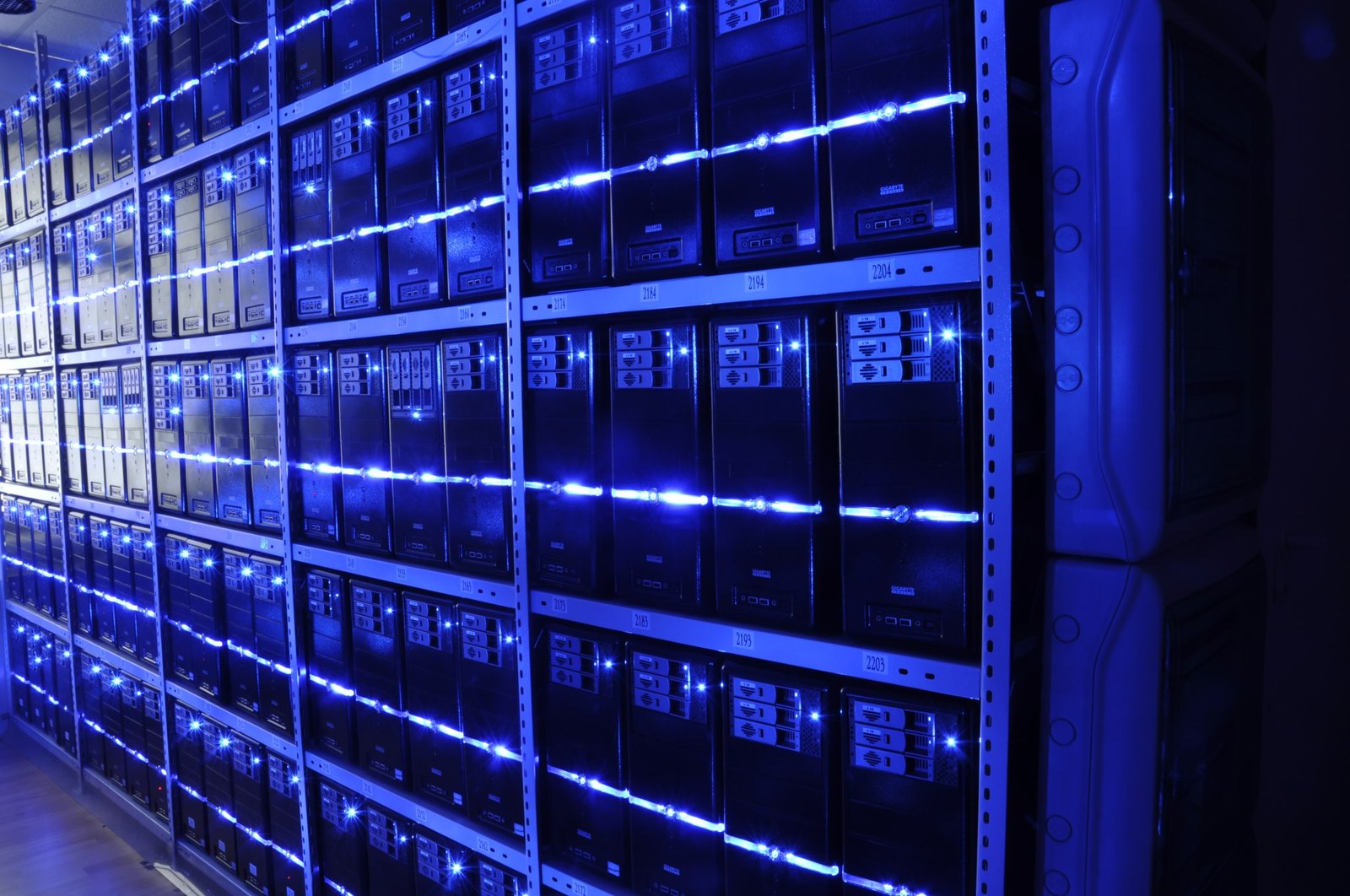
Ulanqab's data industry did not appear overnight. In 2013 the city planned a big-data industrial park and built the Huawei Cloud Data Center with Huawei — the starting point of the whole chain. The campus, on the edge of the capital's 'one-hour economic circle', can hold close to 150,000 servers, is Huawei's largest cloud data centre in North China, is known alongside Gui'an as 'South Gui'an, North Ulanqab', and has been designated a National Green Data Center. Apple then placed its iCloud North China data centre here — its second in China after Guizhou — committed to 100 per cent renewable energy.
2. Why here: cold, green, close
- Cold — an annual average of about 4.3°C, with natural cooling usable for roughly ten months a year, which sharply cuts the electricity spent on cooling.
- Green — by the end of 2025 the city's renewable capacity passed 20.29 gigawatts, with green power at 67 per cent of the total.
- Close — 320 kilometres from Beijing, inside the capital region's one-hour circle, with acceptable latency.
- Stable — extensive basalt bedrock and deep strata make it geologically stable, well suited to disaster recovery.
The most direct factor is power. For a computing centre, electricity is 60 to 70 per cent of total operating cost; at the same scale, the lifetime power bill in Ulanqab runs 30 to 40 per cent below the eastern seaboard. That is not a small saving — it decides whether a project's numbers work at all.
3. Scale: from 36 to more than a hundred
At the end of 2024 Ulanqab had 36 signed computing-centre projects. By the end of 2025 it had 84 signed data-centre projects, 81 of them intelligent-computing centres; by the end of June 2026 the figure was 89; the latest published number is more than a hundred projects landed, with over 5 million standard racks signed, about 47.93 billion yuan invested, 650,000 racks built and 430,000 in operation.
What matters more is the mix: operating capacity has reached 172,000 petaflops, up 112 per cent year on year, with intelligent computing above 95 per cent of it. The emphasis has shifted from storing data to running models — in industry shorthand, from a 'computing factory' to a 'city of tokens'. The 2026 target is more than 200,000 petaflops of total capacity and over 8 billion yuan in related revenue.
4. Two projects worth noting
The Zhongjin Data zero-carbon computing base, commissioned in July 2025, is the country's first wind-solar-storage integrated campus with dedicated green power lines to the halls: 300 megawatts of wind and solar, 45 megawatts of storage, 25,000 planned racks and a design PUE below 1.2 — cited as a national example of computing-power and power-grid coordination. In August 2026 Envision's Galaxy Campus came online in Ulanqab: a single building of about 120,000 square metres, described as the world's largest single AI data-centre building, with parallel capacity for a million accelerators.
5. Costs and constraints
There are costs. In the first half of 2026 fixed-asset investment in the local computing industry rose 38.1 per cent year on year while electricity consumption rose 89.52 per cent — computing growth drives power growth directly. Land quotas have become the new constraint: some signed projects are still waiting for sites. For a city built on farming and herding, it means the grid, water, talent and urban services all have to keep up.
6. What it means for us
The Ulanqab lesson is simple: in the end computing competition is decided by power, cooling and land, not by how handsome the halls look. That is the same logic we apply to agriculture and manufacturing in Southeast Asia — work out the unit cost first, then talk about scale. For anyone doing cross-border business it is a new reference point too: when China's computing cost is pushed to sixty or seventy per cent of the eastern seaboard's, the cost structure of AI applications for companies going abroad changes with it.
Sources: Ulanqab Municipal People's Government, 'Green power feeds computing'; Xinhua Inner Mongolia, 'From weather-dependent to AI-driving: Ulanqab's computing-power coordination' (August 2026) and 'Ulanqab builds a national green computing base'; Science and Technology Daily, 'Ulanqab: from computing factory to token pasture' (20 August 2026); Qiushi, 'Ulanqab sprints to become the city of tokens' (June 2026); Economic Observer, 'Ulanqab, a hot spot for computing power' (August 2026); People's Daily Inner Mongolia, 'Four leads in Ulanqab's computing industry' (November 2025); Huawei Digital Power on the 'South Gui'an, North Ulanqab' National Green Data Center designation. Compiled and written by Singapore Global International; figures follow the latest official releases.
Curious how computing costs affect going-global businesses?
From the cost structure of AI applications to deployment scenarios in Southeast Asia — get in touch and let's talk.