News · Church
Labour Day at Glory Presbyterian Church: “I will go to the altar of God”
A seniors' and communion Sunday, a sermon on Psalm 43, and an encounter with Vincent and Qiuxiang Toh afterwards.
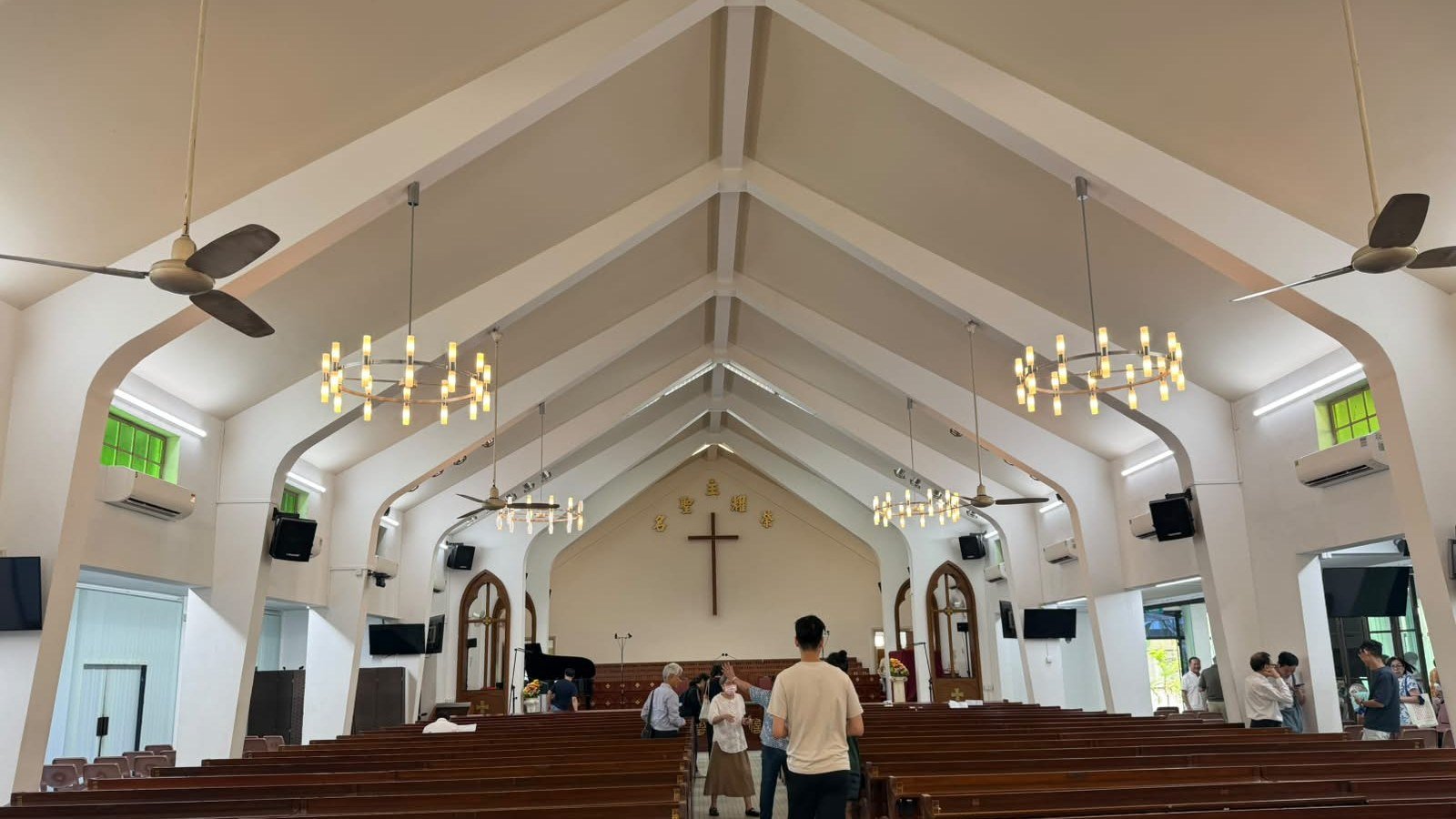
On 1 November 2026 I joined the Labour Day and Holy Communion service at Glory Presbyterian Church in Bukit Timah. After the benediction I met Vincent and Qiuxiang Toh in the sanctuary — not by arrangement, but by chance. In a church, such encounters rarely feel like chance.
1. The church on Pei Wah Avenue
Glory Presbyterian Church stands at 9 Pei Wah Avenue, in the Bukit Timah area, and its history is older than Singapore itself. In 1848 the early missionary Benjamin Keasberry established the Malay Chapel at Prinsep Street; in 1856 Rev Thomas McKenzie arrived and engaged Elder Tan See Boo to work at the Bukit Timah mission station; in 1862 the government granted land, the Malay Chapel raised the funds, and the congregation's first building went up in Bukit Timah. In 1881 Rev John A. B. Cook was sent to Singapore, and the congregation was largely made up of immigrants from Swatow and Amoy.
In 1889 Pei Hwa Presbyterian Primary School was founded; in 1935 Dr John Sung came to Singapore and the church experienced revival and growth; in 1951 construction began on the new sanctuary and school building, and on 21 August 1954 the foundation stone was laid; in 1955 the church took the name Glory Presbyterian Church; in 1968 English worship began. This year's theme is “One Church One Heart” — one house, one heart. On Labour Day those words sit very naturally.

2. A liturgy that kept returning to its elders
It was the Chinese congregation's combined seniors' and Holy Communion Sunday service. Elder Casey Lee presided, Rev. Roy Koh preached, and Deacon Sophia Lim interpreted. The service opened with Psalm 107:1–3: “Oh give thanks to the LORD, for he is good, for his steadfast love endures forever!” The congregation sang “The Altar of God”, “Sing a New Song to the LORD” and “Great Is Thy Faithfulness”, and Rev. Dr Tay Hae Dar led the prayer of praise and confession.
The responsive reading was Matthew 5:1–12, the Beatitudes. The Selah Choir sang “I Will Rejoice in the LORD”, its words from Habakkuk: though the fig tree does not bud, the vines bear no fruit, the olive crop fails, the fields yield no food, the sheep are gone from the fold and no cattle in the stalls — yet rejoice in the LORD. On Labour Day that hymn is not decoration; it is a plain fact: what a life harvests may shrink, but the source of joy need not.
Sister Lin Wang Mei read Psalm 43. Rev. Roy Koh then preached on “I Will Go to the Altar of God”. Holy Communion followed with “Jesus, Keep Me Near the Cross”; the response hymn was “Bless the Lord, O My Soul”; the closing hymn “Take My Life and Let It Be”; after the benediction the congregation dispersed in silence to the postlude. The verse of the month is Psalm 43:4: “Then I will go to the altar of God, to God my exceeding joy.”
3. Three movements: believe, follow, arrive
The sermon outline printed in the order of service has only three movements, and yet it covers a whole life. The introduction was about “what senior adults often say” — the phrases older people keep repeating. The outline does not record which phrases, but anyone sitting in the pews knows them: I'm old, I'm no use, I can't walk any more, sorry to trouble you. These are not complaints; they are the small self-doubt left behind after a lifetime of work.
The first movement is “firmly believe”. The psalmist opens by demanding: why have you rejected me? Why must I go about mourning under the enemy's oppression? He does not pretend to be strong; he brings the grievance straight to God. To believe firmly is not to be free of grief, but to keep believing, in the middle of grief, that there is a God to whom it can be told.
The second movement is “follow God's leading”. The psalmist prays: send out your light and your truth; let them lead me, let them bring me to your holy hill and to your dwelling. Older people know best that a life is not planned by oneself. Having come through war, migration, illness and farewells, to still be here is not luck — it is leading. The third movement is “go to the altar”. The altar is where sacrifice is offered and where God is met. The psalmist does not conclude “I will go once I am better”, but “I will go to the altar of God, to God my exceeding joy”. When you cannot walk, you still walk; slowly, you still walk.
The conclusion is blunt: “Even in our old age, may we continue to follow God's leading, until we come before God, our exceeding joy.” The application is left to each hearer: “As we grow older, what keeps us trusting God, following His leading, and finding our greatest joy in Him?” These are the outline's words, not a verbatim record of the sermon. But three movements and one conclusion already set the direction of this Labour Day: not to put the elderly on a pedestal, but to walk this road alongside them.
4. Meeting the Tohs in the pews
After the service I met Vincent and Qiuxiang Toh in the sanctuary. Vincent Toh is General Secretary of Christian Communications Singapore. Christian Communications was formed in April 1971 by the merger of the Hong Kong section of the China Sunday School Association and the Dao Publishing House, its roots reaching back to the publishing department of the China Inland Mission. Christian Communications Singapore serves Chinese churches through publishing, media, training and China ministry; according to a 2016 report in Methodist Message it reaches more than 1,000 church leaders and 100,000 readers a year.
What I remember most happened in 2020. On 1 July that year Christian Communications launched a dialect telephone devotional: six dialects — Teochew, Hainanese, Shanghainese, Hakka, Foochow and Hinghwa — with about fifty volunteers recording two years of daily devotions, five minutes each, ten telephone lines kept open round the clock, at a production cost of S$38,000. The reason was simple. Preaching at a church, he saw a sanctuary full of older people, and the church told him there were more still at home who could not come out. Those with smartphones had online services; those without had only a telephone. So they made that telephone ring.
Further back is Egypt in 2012. He was leading a church tour group of twenty-one when gunmen stopped the vehicles. When they boarded and demanded a hostage, he stood up and volunteered himself so the others could go free; he was released eight hours later. The episode was reported in the press and in Methodist Message; he himself seldom mentions it. A general secretary whose work turns out to be “telephoning old people” and “standing in front of the group” — on Labour Day those look like the same work: not leaving anyone outside.
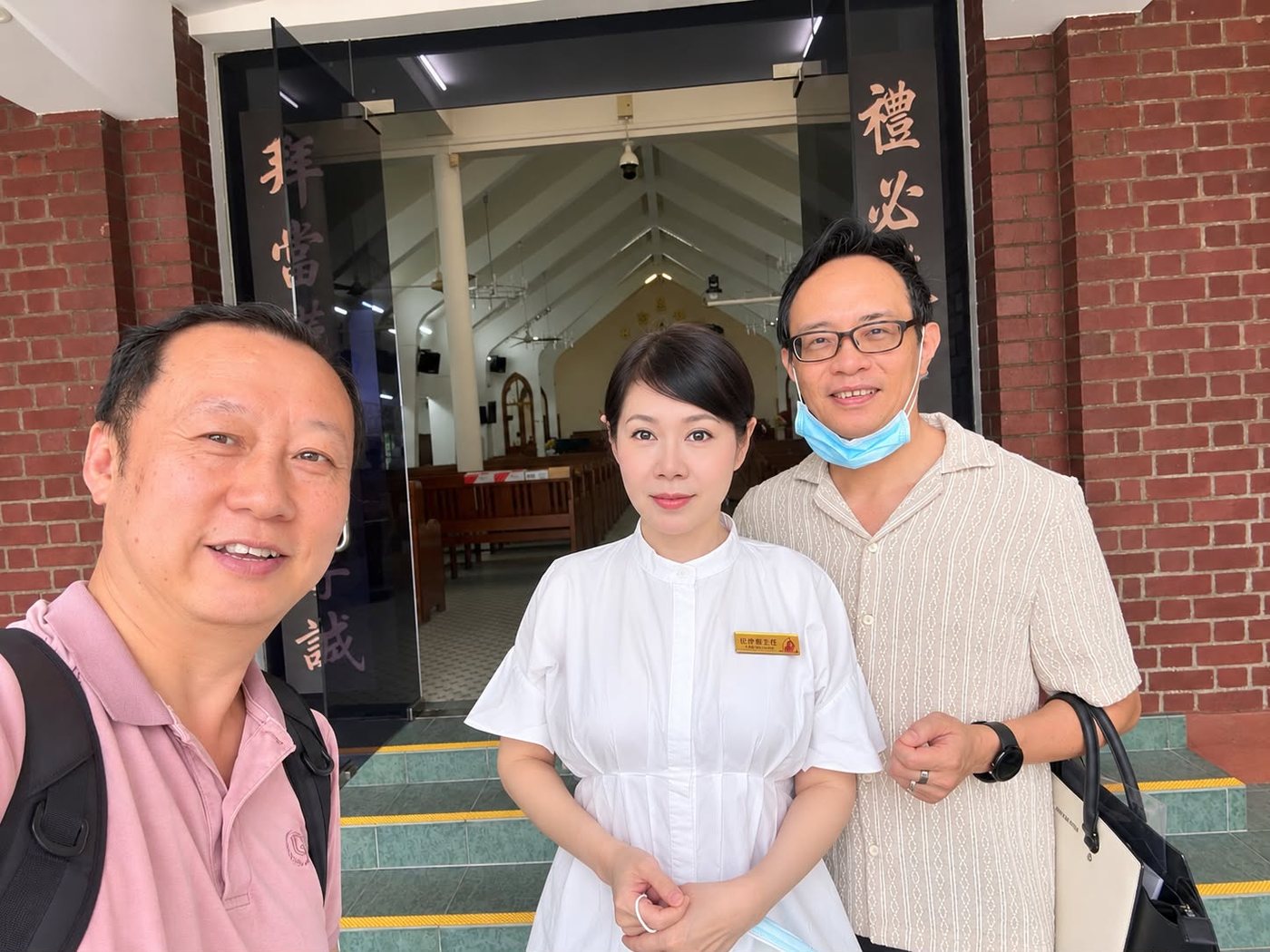
5. Hardship and glory are two sides of one coin
The theme shared that day was the hardship and the glory of older people. The hardship is concrete: the body weakening day by day, old friends leaving one by one, children far away, conversation that no longer meets, needing an arm just to go out. The glory is concrete too: they carried a whole era, held the church up, raised the children, handed on the faith; they have prayed longer than we have, and they remember more grace than we do.
Psalm 43 does not dodge hardship, and does not stop there. It lets grief and hope live in the same passage: “Why are you cast down, O my soul, and why are you in turmoil within me? Hope in God; for I shall again praise Him, my salvation and my God.” The Beatitudes work the same way: the poor in spirit, those who mourn, the meek, those who hunger and thirst for righteousness — none of them the strong by the world's reckoning, all of them at home in the kingdom. Reading the Beatitudes on Labour Day reminds the congregation that the church's order of value is not the world's.
6. The good news
As the service ended I kept turning over Psalm 43:4: “Then I will go to the altar of God, to God my exceeding joy.” The good news is not that we will not grow old, not that we will not fall ill, not that we will not grieve. The good news is that even old, even ill, even slow, there is still an altar to walk up to; still a God who is willing to be called “my exceeding joy”. This road is walked in youth and walked in age; walked when the pace is quick and walked when it is slow.
I thank God for leading this day, for the meeting at Glory Presbyterian Church with Vincent and Qiuxiang Toh, and for receiving this good news together with them. And may every older person who walks into this sanctuary be remembered, heard and accompanied — all the way to that altar.
Want to talk about AI, media and church work?
We teach in Chinese, starting from the phone. Courses and one-to-one consulting: WhatsApp +65 8134 8593.