Faith · Public issues
After the US midterms: is the voice of the people the voice of God?
US constitutional power, the presidential veto, and what Scripture says about human nature and God's sovereignty.
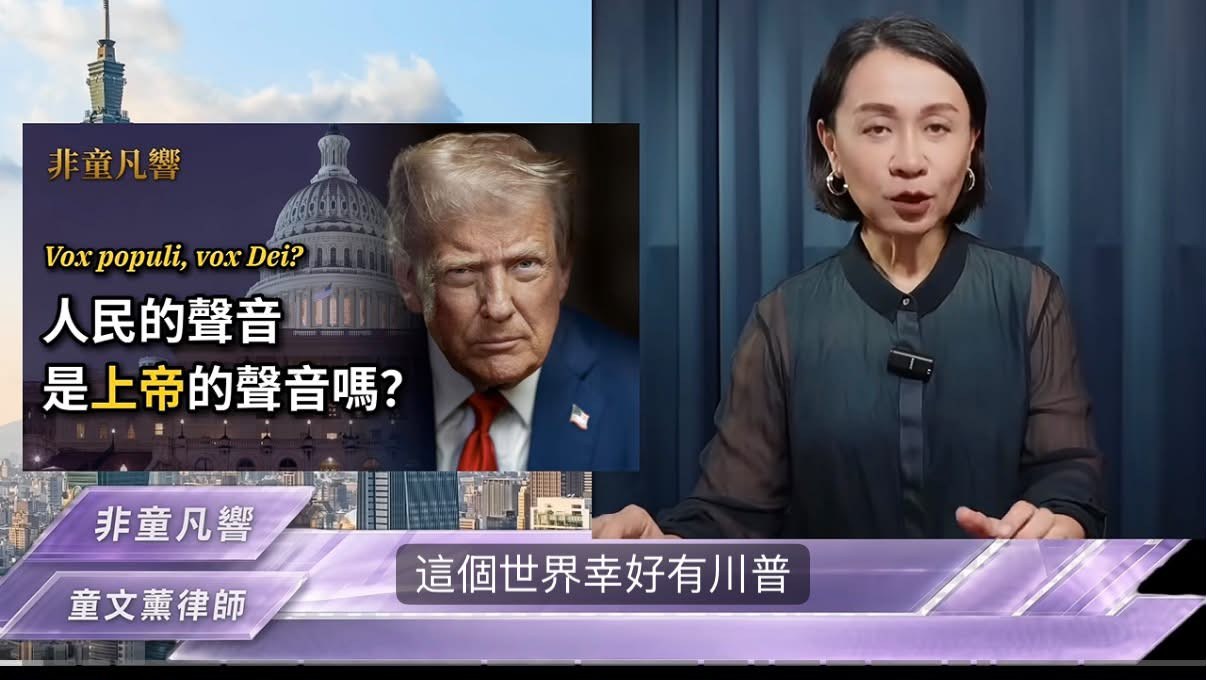
On 4 November 2026, Tung Wen-hsun discussed the US midterms on her programme Fei Tong Fan Xiang. The question she posed was not who won, but this: with the Democrats taking both chambers, was the champagne opened too early? Does a president lose power when Congress changes hands?
This article does not transcribe the programme. It follows its thread: first how the US Constitution distributes power, then how Scripture speaks of crowds, authority and God's sovereignty. Quotations are marked in three ways: what the programme cited explicitly (Proverbs 21:31), books it named without a chapter (Exodus, Luke), and passages added by the author for explanation.
1. After the election, who actually holds power?
The programme states that after the 2026 midterms the Democrats won majorities in both chambers. That is the programme's assessment; seat counts should be checked against official results. But the question it raises is concrete: does a change in Congress leave the White House helpless?
The answer is no. American power is not a single cake to be taken whole; it is three parts with different sources, terms and checks: Congress elected district by district, the president chosen by the Electoral College, federal judges nominated by the president, confirmed by the Senate and serving for life. Different mandates mean one election rarely changes all three. What midterms usually change is how hard it is to legislate, not who holds the executive.
2. If the Democrats win both chambers, does the president lose power?
At 05:52 the programme listed the advantages a president keeps after an election, which fall into four groups: the office and executive power remain; on foreign policy the president is still the primary decision-maker; on military matters the president remains commander-in-chief; in the legislative process the veto remains available. Article II vests executive power in the president and makes him commander of the armed forces; Article I gives legislative power to Congress. The two run in parallel.
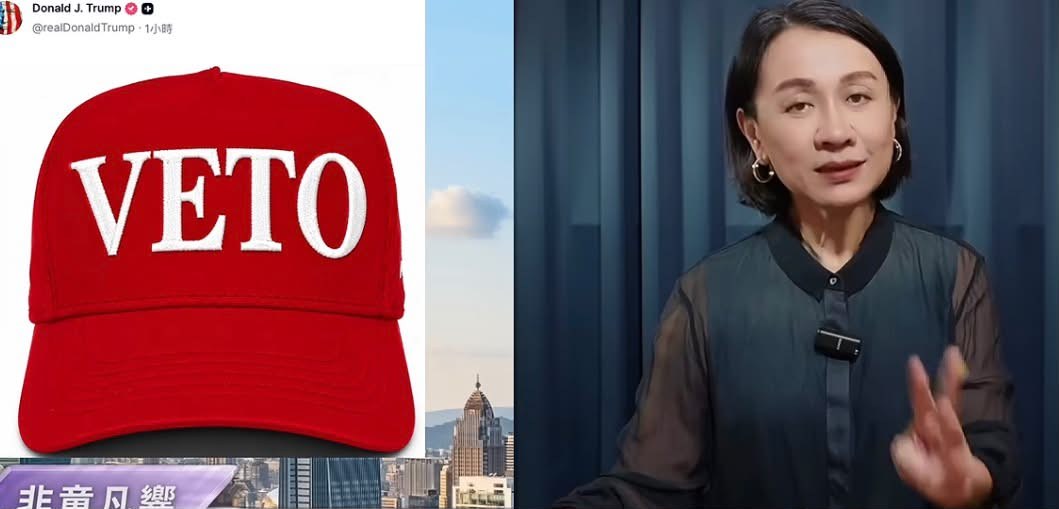
As for what the programme says at 07:53 has not changed, it comes down to one sentence: a new Congress is not a new national direction. Foreign policy, the approach to Iran and China, arms sales to Taiwan, tariffs, and the president's diplomatic and military authority sit within executive power and existing law; they do not reverse the morning after the House changes hands. This is not to say Congress is powerless — budgets, confirmations, investigations and legislation can all slow or bind a president — only that change costs time, procedure and political price.
3. Why does the Constitution give the president a veto?
The key clause is Article I, Section 7, Clause 2. A bill passed by both chambers goes to the president; if disapproved it returns to its chamber with objections. To override, Congress needs two-thirds in each house. The design has three purposes: to prevent tyranny of the majority (the two-thirds bar forces cross-party support); to force compromise (the president's concerns must enter drafting); and to add stability (a president's term is out of step with Congress, so policy does not swing wildly with one election).
Yet the veto is not absolute. Two-thirds is hard to reach in a polarised Congress; a president cannot veto a constitutional amendment or a appointment, and cannot conjure policy from a veto. The veto itself faces public opinion, budgets and the next election. An election victory, then, is not unlimited power: it brings seats, agenda and voice — not the last word.
4. Is the voice of the people the voice of God?
Often quoted as a democratic maxim, the phrase has a less tidy history. It is usually traced to Alcuin, a scholar of the Carolingian court, who in a letter to Charlemagne argued against it: do not listen to those who keep saying the voice of the people is the voice of God, for the tumult of the crowd is seldom near the truth.
What is worth discussing is this: democracy is a procedure for governing, not a standard of truth. Elections answer who decides, not what is right. Majorities can elect a president and can elect a wrong policy; they can overthrow tyranny and can vote for injustice. This is not an argument against democracy — quite the opposite: because people are limited, we need elections, term limits, checks and peaceful transfers of power. Christians can treasure these institutions while keeping an independent spiritual judgment: endorsing no party, and treating no election result as a direct declaration of God's will.
5. Exodus and Luke: the will of crowds and the will of God
At 21:35 the programme mentioned Exodus and Luke. To be clear: only the books are confirmed, not the chapters or verses. The two passages below are added by the author for explanation and are not the programme's words. Exodus 32:1 records that Moses delayed on the mountain, so the people gathered around Aaron and demanded gods to go before them. The crowd was loud and the reasoning practical — the leader is gone, we need something we can see. Aaron complied and cast the golden calf.
Luke 23:18-21 records that Pilate wanted to release Jesus, but the crowd shouted together: Away with this man! Release Barabbas to us! The Barabbas they asked for was in prison for insurrection and murder. Procedurally it was the voice of the people; morally it was a collective error. Together the passages make one observation: loudness has no necessary relation to truth. Crowds fear, are stirred, and trade justice for immediate safety. Not that crowds are always wrong — only that crowds, too, must be tested by truth.
6. Madison on human nature, and the Christian doctrine of sin
The programme quoted James Madison: “If men were angels, no government would be necessary.” The line comes from Federalist No. 51 (1788). Madison goes on: if angels governed men, neither external nor internal controls on government would be needed. He is not speaking of one group's corruption but of human limitation as such: those in power err and are pulled by interest.
This resonates with the Christian doctrine of sin. Romans 3:23: “for all have sinned and fall short of the glory of God” (added by the author). People do not merely err occasionally; they drift by nature, and the greater the power, the greater the cost of the drift. Institutions therefore distrust not one man but any man. Separation of powers, term limits, the veto, judicial review and a free press all write “people may turn bad” into the design in advance. Madison's line is not Scripture, but its realism about human nature runs close to it.
7. Proverbs 21:31: human duty and God's sovereignty
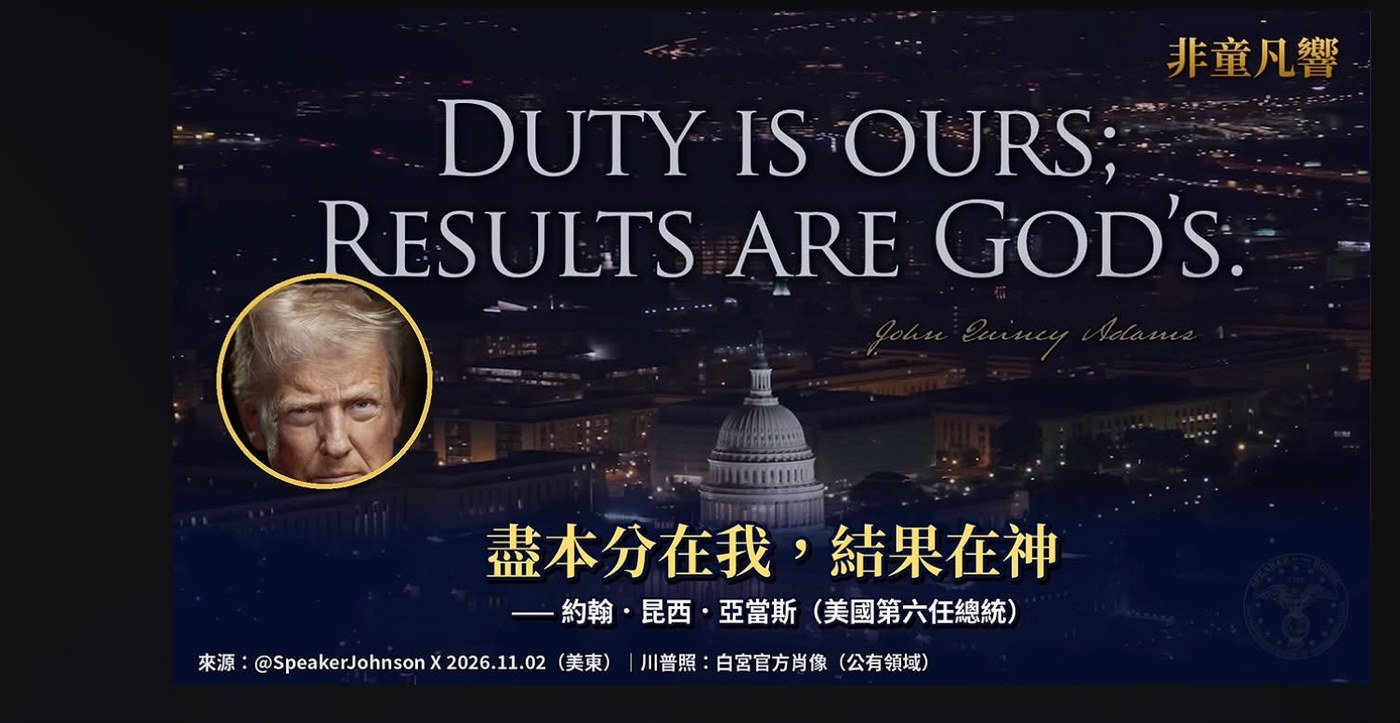
“The horse is made ready for the day of battle, but victory rests with the Lord.” (Proverbs 21:31)
This is the verse the programme cited explicitly, and the spiritual summary of the whole piece. It has two halves, and neither stands alone. The first is human duty: the horse must be made ready. On a day of battle, supplies, equipment, training, intelligence and allies cannot be skipped. Today that means voting, obeying the law, studying policy, and a nation keeping its strength. Faith does not make people idle, nor let them push everything onto “God's will”.
The second half is God's sovereignty: victory rests with the Lord. No amount of preparation guarantees the outcome. People can decide to go to war but not decide who wins; can decide to legislate but not decide history. The verse states human duty and human limit at once, and blocks two extremes: passive waiting — the outcome is God's, so I do nothing — and political superstition — elect the right people, pass the bill, change the government, and the kingdom arrives. Proverbs 21:31 is blunt with both: prepare the horse, but the victory does not belong to the horse.
8. Conclusion: how should Christians view politics, elections and the nation's future?
Back to the first question: is the voice of the people the voice of God? No. The voice of the people is the voice of the people — worth hearing, recording and respecting, but it must be tested by truth. Elections can change a governing party, a legislative agenda, a nation's direction; they cannot change God's sovereignty, nor turn any party or leader into the incarnation of God's will.
Christians live with two identities: citizens of earth and subjects of the kingdom. The first asks us to vote, obey the law, care about public affairs and pray for those in authority; the second reminds us that our hope is not in a ballot box. Micah 6:8: “He has shown you, O mortal, what is good. And what does the Lord require of you? To act justly and to love mercy and to walk humbly with your God” (added by the author). Justice, mercy and humility do not go out of date under any government.
Elections pass, Congress changes, presidents leave office. The horse is still to be made ready — but victory rests with the Lord.
Want to keep talking about faith and public life?
We are happy to talk it through in Chinese. WhatsApp +65 8134 8593.