Education · University visit
Visiting SUTD: design is not soft
In November, Secretary Xie Xiaonan and Dean Chen led a Wuxi Foreign Language School delegation to SUTD, meeting two IC-design master's students at the Design AI centre to discuss study, teaching and jobs — with full background on the university and the programme.
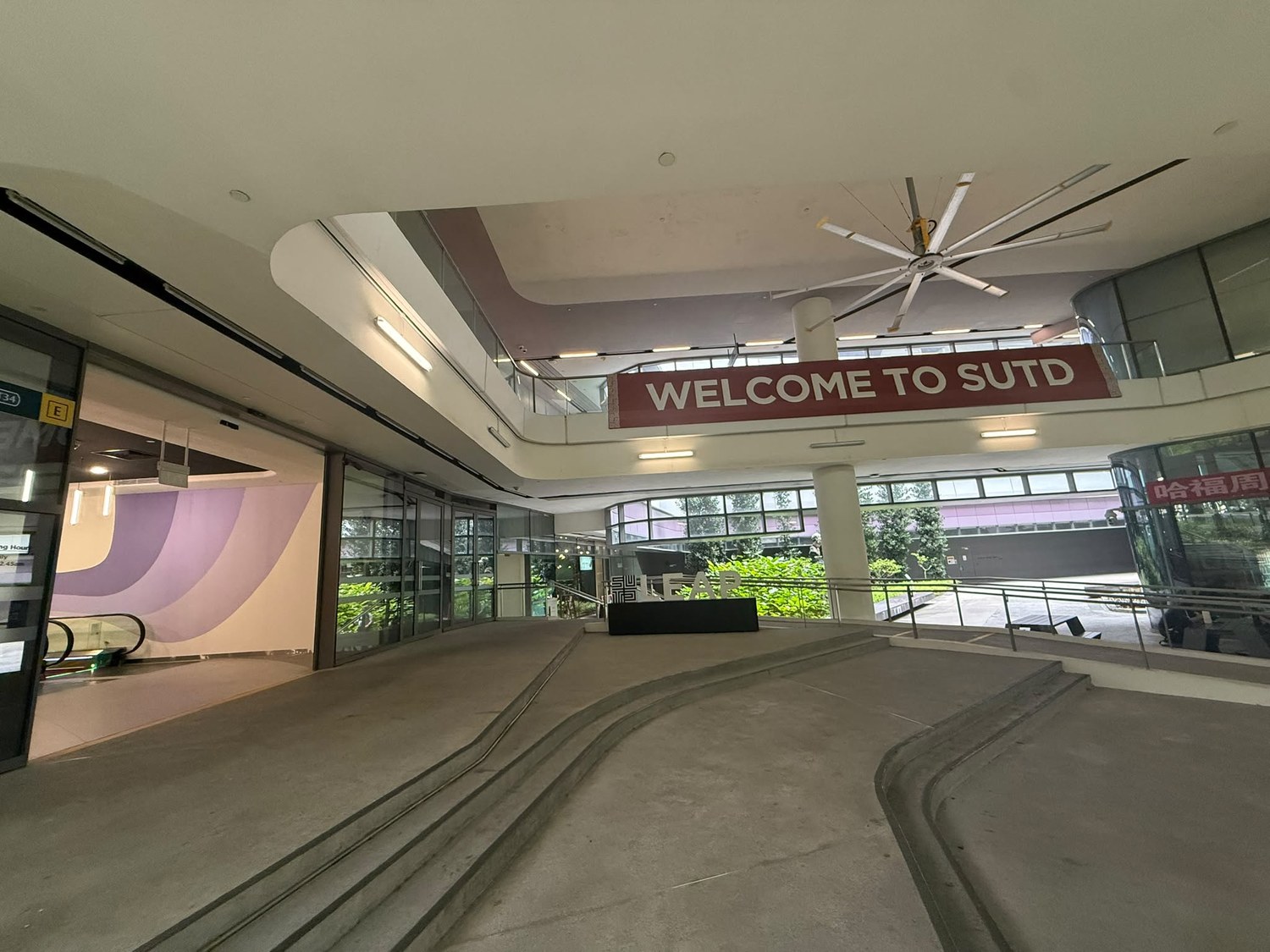
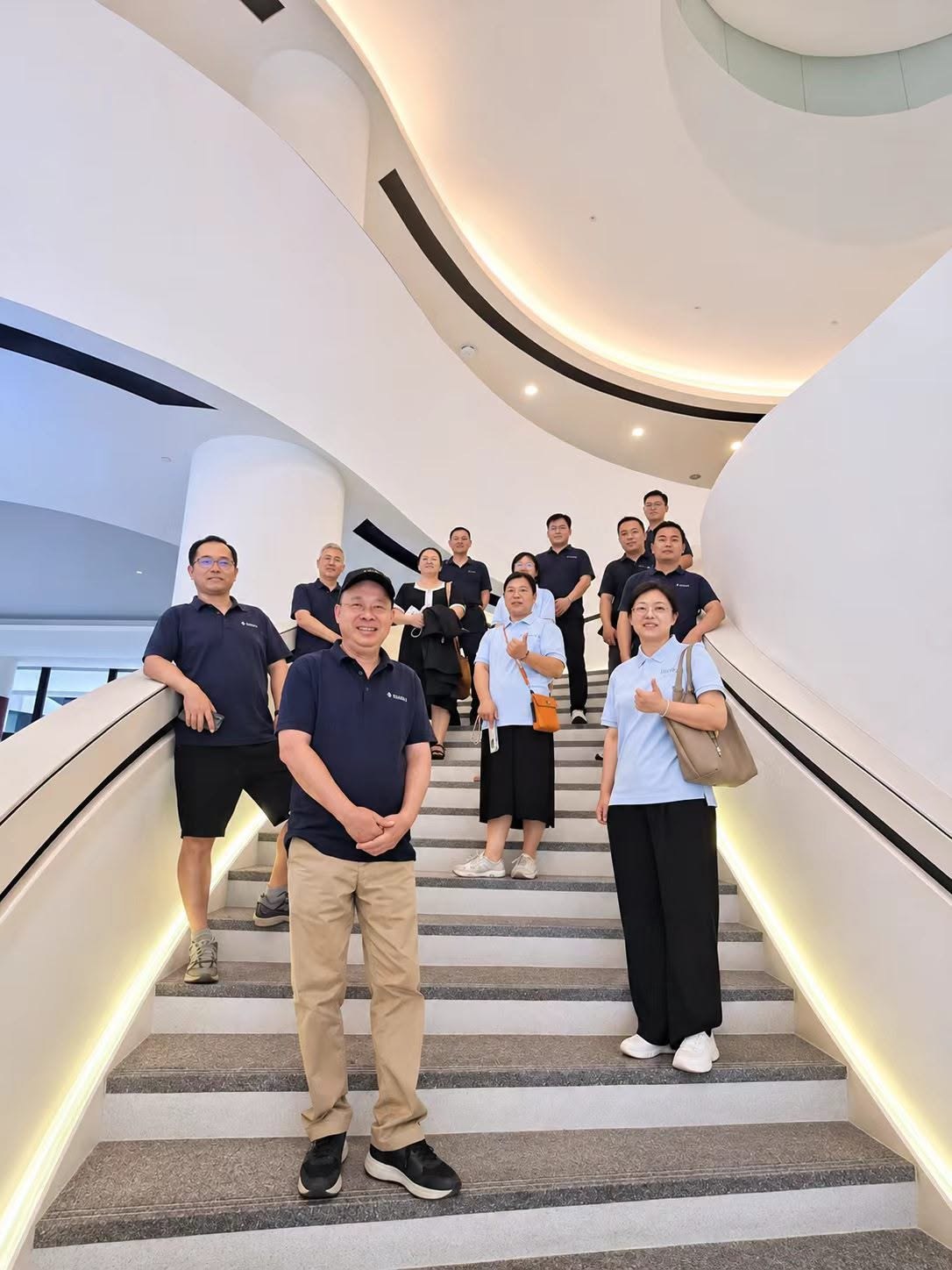
SUTD's atrium is tall, grey steps climbing one flight after another, a red “WELCOME TO SUTD” banner hanging mid-air. In November, Secretary Xie Xiaonan and Dean Chen led a Wuxi Foreign Language School group up those steps. Two things were on the agenda: how a university turns “design” into a curriculum, and how a programme sends people into the semiconductor industry.
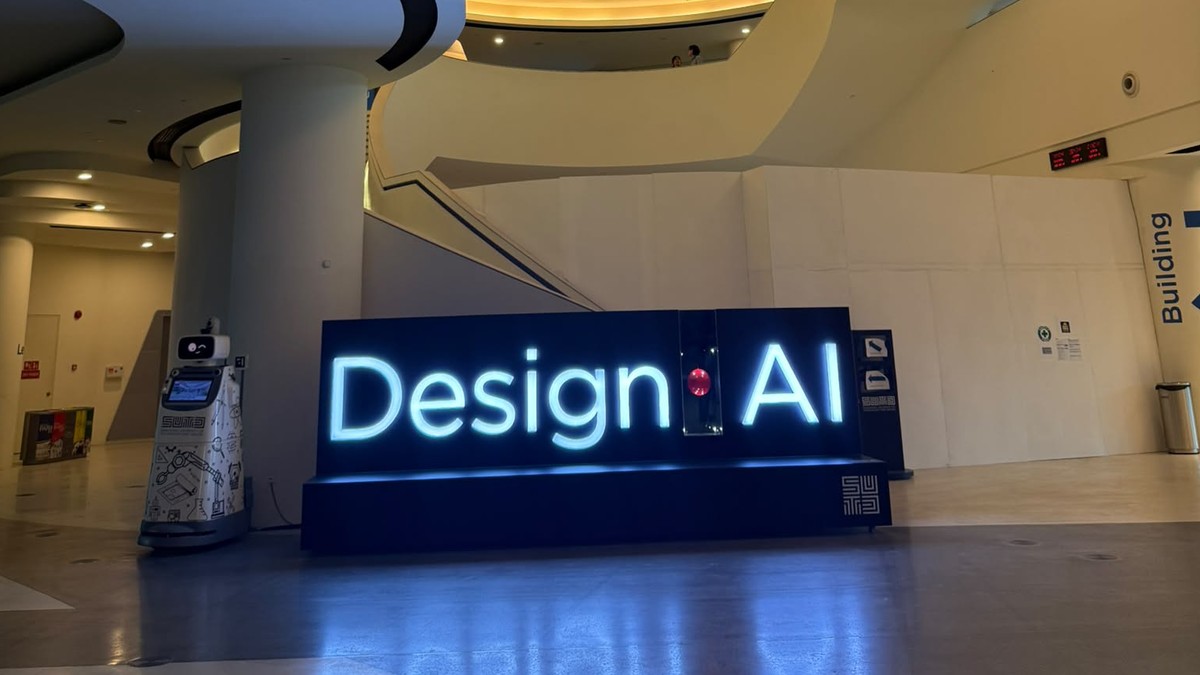
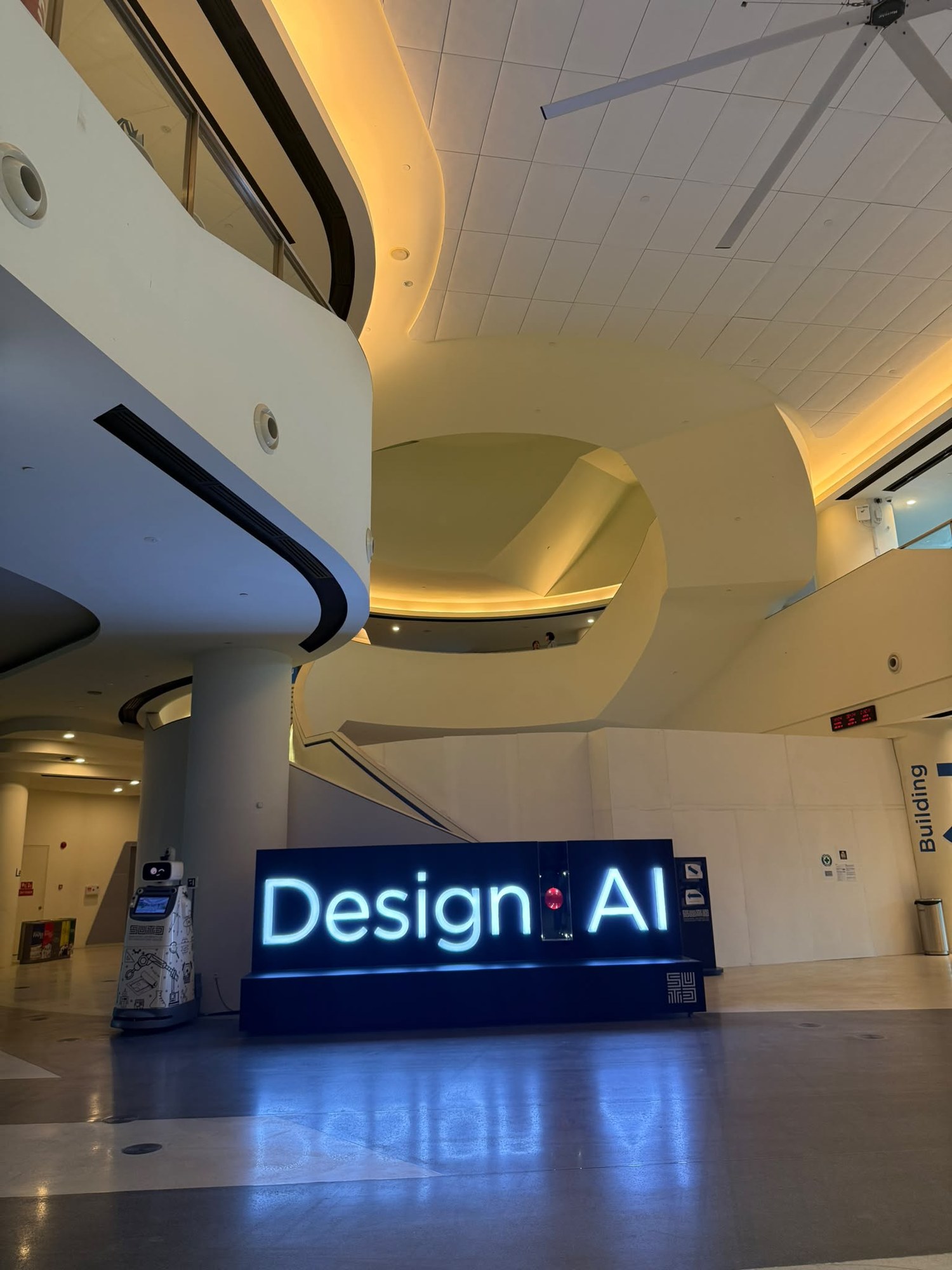
At the top of the steps stands a lit sign: Design AI. Beside it a small white service robot, the floor reflecting light. The sign happens to describe the school's character — AI is not an add-on module here, it sits inside the design process.
1. First, counting Singapore's public universities
Singapore has six autonomous universities: NUS (1905), NTU (1991), SMU (2000), SUTD (2009), SIT (autonomous from 2014) and SUSS (renamed from SIM University in 2017). In that order, SUTD is the fourth.
The order is not pedantry. Each public university has a remit: NUS and NTU are comprehensive, SMU leans to business and social sciences, SUTD does design and engineering only, SIT is applied and industry-linked, SUSS focuses on social sciences and lifelong learning. Look at the remit before the ranking and you waste fewer years.
2. What kind of school SUTD is
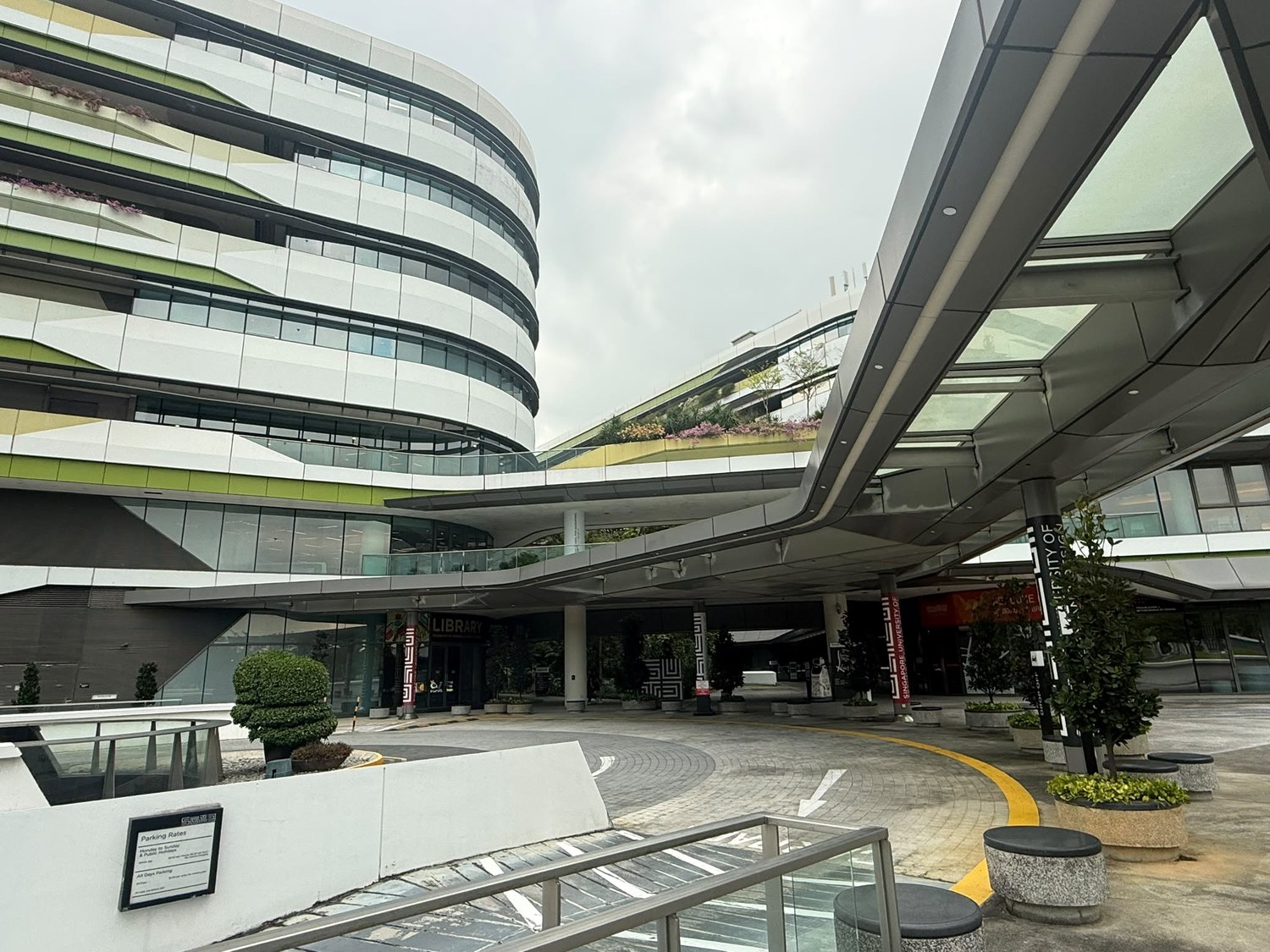
SUTD was established in August 2009 in collaboration with MIT, and the imprint shows: small classes, project-driven work, building before memorising. Undergraduates are not sorted by department but by four pillars: Architecture and Sustainable Design, Engineering Product Development, Engineering Systems and Design, and Information Systems Technology and Design.
The campus sits on Somapah Road near Changi, the buildings joined so that corridors and atria run through one another; a student can cross from one faculty to another without going outside. That is not an aesthetic choice but a nudge: people from different disciplines meet in corridors. A design school's worst failure is everyone working alone.
We reached the atrium during a small ensemble performance: a few students on wind instruments, music stands under the staircase, an audience in black folding chairs, others leaning over the second-floor railing. No host, no banner — one piece, then the next. This is what an engineering school's ordinary day looks like.
Against NUS or NTU with tens of thousands of students, SUTD's cohorts are far smaller: faculty know your name and lab slots are obtainable, but the alumni network and course menu are narrower. That belongs in any honest comparison, not only the advantages.
3. Design AI: not a course but a way of working
In the Design AI space, student projects mostly look like this: take a real setting — patient flow in a hospital, energy use in HDB blocks, quality inspection on a line — define the problem with design and ethnographic methods, then solve it with machine learning. The order matters: right question first, model second. Reverse it and you get technically advanced things nobody wants.
This is a useful warning for students from China. They are usually not behind on mathematics or coding; what is weaker is stating the problem: who uses it, why now, what counts as success. Design AI trains exactly that, and that is what interviews press on.
4. The programme: 12 months, eight courses, 96 credits
SUTD's IC track is the Master of Science in Technology and Design (Advanced IC Design and Technology): one year full-time, coursework-based, eight courses and 96 credits — two core design courses and six specialist courses at 12 credits each. No thesis, but a project in every course.
The eight form a chain: Innovation by Design covers putting marketing, design, engineering and manufacturing into one product process; Semiconductor Device Technology and Design: Silicon and Beyond runs from device physics to sub-10nm materials and architectures; Digital IC Design goes to transistor-level design, timing and design-for-test; Design Science is the method itself; Materials and Design for Semiconductor Technology uses TCAD for materials-device-package co-design; Reliability Engineering and Failure Analysis of Advanced CMOS Devices covers failure mechanisms; Advanced Topics in IC Design focuses on RFIC; AI for Semiconductor Manufacturing applies machine learning to yield and defect detection with Python, Keras, TensorFlow and PyTorch.
Materials and devices, circuit design, manufacturing and yield, reliability — the chain is complete, and that is what separates it from many similar programmes. Plenty of IC master's degrees cover only the middle: layout and EDA tools, without explaining why a device behaves as it does or why yield drops. Asked “why” in an interview, the gap shows.
5. Two students: Gao and Kong
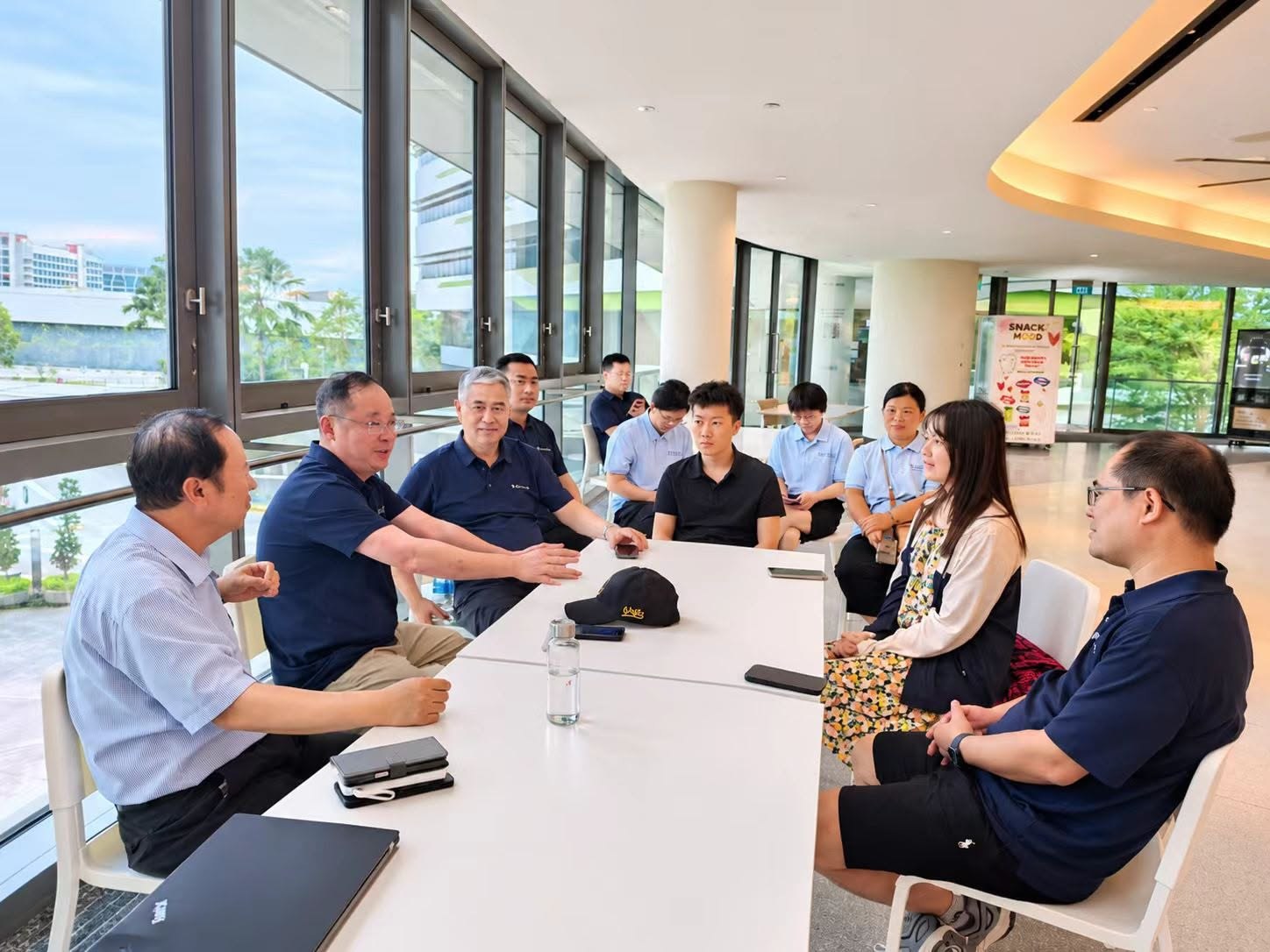
Gao and Kong both come from China, with undergraduate backgrounds in electronics and microelectronics. Three things they said were more useful than any prospectus.
First, intensity. None of the eight is filler; weak foundations in device physics or maths hurt, especially device modelling and reliability analysis, where memorising formulas is not enough. Their account was plain: two or three days a week end at lab closing time.
Second, method. What is taught only counts once it is in a project. With TCAD, EDA and Python, an interviewer can tell within minutes who has actually run them.
Third, language. Classes are in English and the ear adapts in three months, but explaining a failure mechanism in English takes deliberate practice. The real hurdle, they said, is not conversation but technical vocabulary.
Semiconductors are not new to Singapore. From the late 1960s, when several American firms set up assembly plants here, the chain grew into wafer fabrication, R&D and regional headquarters, and remains a pillar of manufacturing today. That is why a university barely fifteen years old can run a complete IC line: the industry sits at the door, so the curriculum has somewhere to land.
The two ends differ in temperament. Design wants circuit intuition, tool fluency and patience with specifications — ten revisions of one block is normal. Manufacturing wants device understanding, statistics and process discipline — a one-point yield drop may hide differences across hundreds of wafers. Choosing a direction starts with which kind of tedium you can bear.
6. Where graduates go: three routes, and a short window
The three routes listed are plain: process engineer in a wafer fab, design engineer in an IC design house, R&D engineer in semiconductor-related fields. In Singapore they are not theoretical — Micron, GlobalFoundries, ST, Infineon and UMC among others run fabs or R&D centres here, and international design houses keep regional teams.
But a 12-month coursework master's leaves a short window: internship applications start about three months in, and conversations about a role begin early in the second half. Both said what makes a CV is what you built, not the A on a transcript.
One sum should be done in advance: tuition, living costs, accommodation, airfare, plus a year out of the workforce. The figures change yearly; use the university's published numbers for the year, and do not budget on last year's.
7. What such a visit means for a secondary school
What Secretary Xie and Dean Chen came to see was not what a university looks like but what would be missing if their students took this path. Two different questions: the first is answered by photographs, the second by gaps in a timetable.
Usually three things are missing: depth in physics and mathematics, practice in technical English, and training in framing a problem. None can be crammed in the final year; they start in lower secondary. That is the real value of a school visit — seeing the gaps early, not signing a document.
The two students walked us to the lift. The Design AI sign was still lit, the white robot turning slowly nearby. “Design” sounds soft, but in practice it is hard: turning a vague problem into a set of testable choices. That is probably what this school most wants to teach.
Thinking about SUTD or another master's in Singapore?
WhatsApp +65 8134 8593 — fit first, application second.