Smart Coffee
Deployment, operation and maintenance of smart coffee machines.
Business Unit 04
Smart equipment and digital systems that transform dining scenarios across campuses, offices and commercial spaces.
Overview
Our Smart Dining unit provides smart coffee machines, automated vending equipment, smart dining and unmanned retail solutions. We combine hardware, software and operations to deliver practical digital F&B solutions for schools, corporate campuses and commercial spaces.
Smart Dining Services
Deployment, operation and maintenance of smart coffee machines.
Automated food vending equipment and supporting operations.
Dining services and equipment configuration for school campuses.
Selection, integration and after-sales service for smart dining equipment.
Scenario-based digital solutions for food and beverage operations.
Deployment support for unmanned retail and self-service payment scenarios.
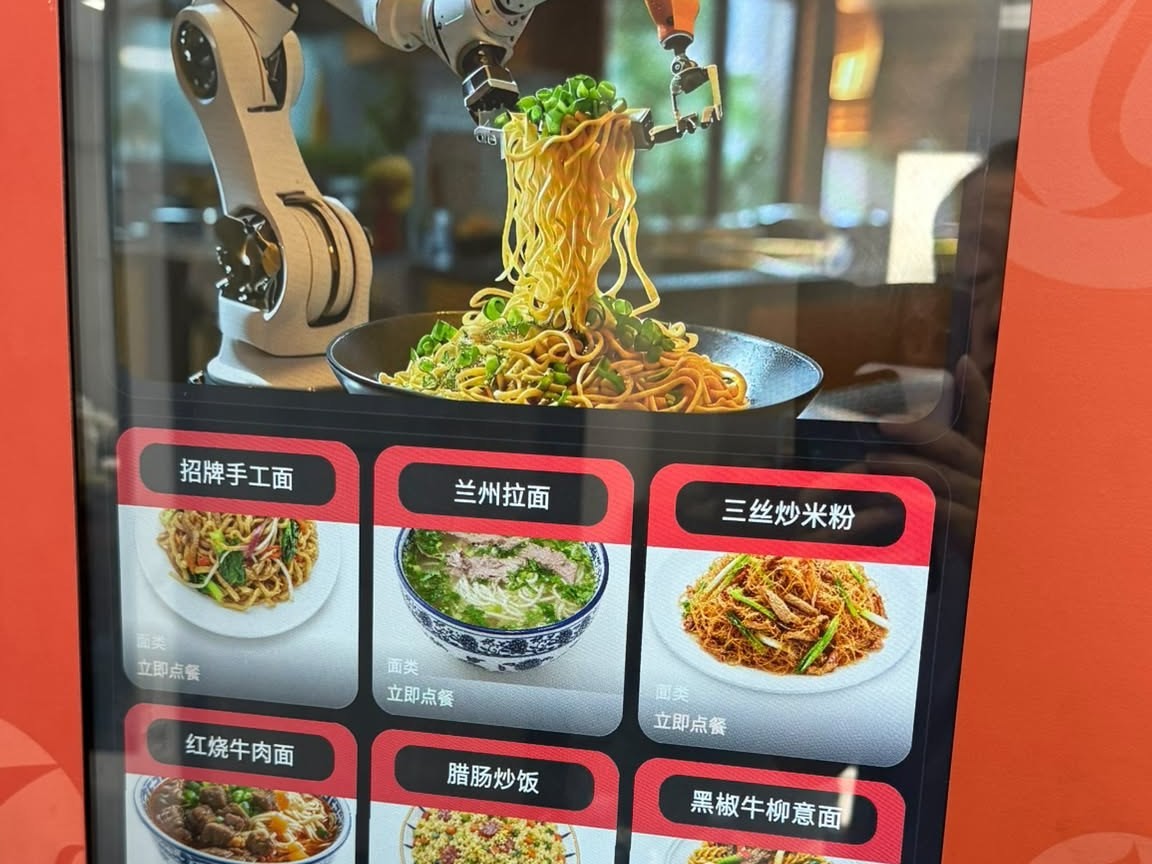
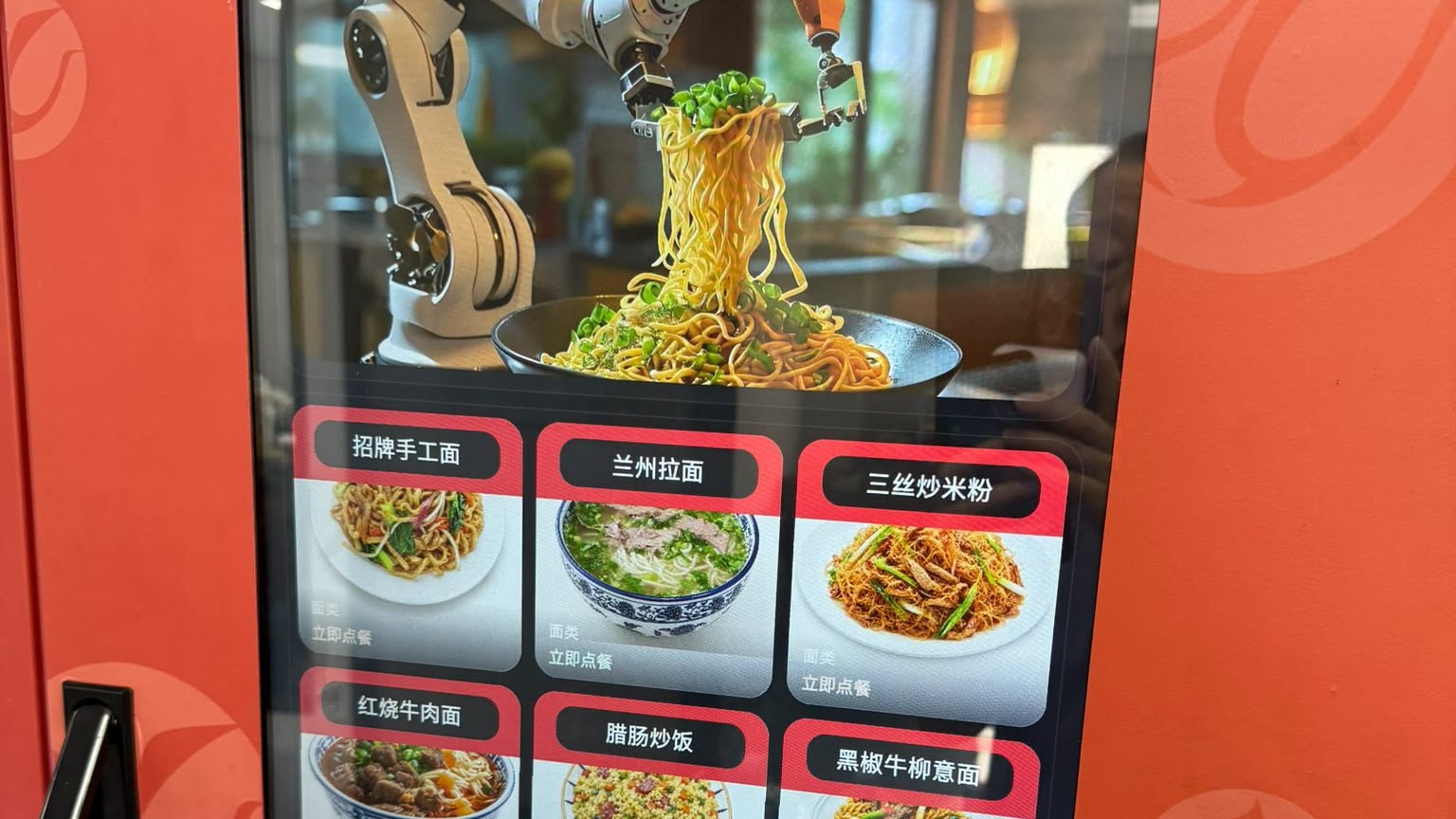
A machine turns out a freshly wok-fried bowl of noodles in about 70 seconds — and small shops built around this idea, marketed as “AI noodle houses”, are quietly rewriting the cost structure of Chinese fast food. Speed is not the whole pitch: they run unattended around the clock, take up little floor space, produce far less cooking smoke, and deliver the same result every time. Behind them, the cooking robot has moved from a kitchen “helper” to what the industry now calls core production capacity. This piece sets out what is actually documented about the category — and a sober cost calculation for anyone thinking of opening a small food business.
In April 2026 the Red Catering Industry Research Institute and Topband·Chuji jointly released the 2026 Report on AI Cooking Robots in Food Service. Xinhua's coverage of it put the conclusion plainly: the AI cooking robot is shifting from a helper to core production capacity, and more and more chains are buying them in batches. In September the same year, Yin Ling, secretary-general of the Beijing Cooking Robot Research Institute, told Securities Daily that 2026 would be the breakout year for deployment at scale.
The pressure comes from costs. NCBD estimates the cooking-robot market at RMB 3.81 billion in 2025, growing more than 20% year on year, passing RMB 10 billion by 2030 at a compound rate of roughly 28.5% between 2026 and 2030. Two other figures matter more to anyone running a small kitchen: labour already accounts for 28.6% of food-service costs, while the sector's average net margin is just 0.3%. The Red Catering Industry Research Institute expects penetration in the group-dining and fast-food segments to reach 50% by 2028.
The sequence is simple enough: the customer scans a code to order; the machine oils the wok, adds the ingredients, tosses and plates on programme; the system logs the recipe and timing of every portion. The four selling points the equipment is marketed on are:
For a chain, the equipment means standardisation. For a single shop, it means turning a veteran chef's craft into parameters that can be reproduced.
It is also why the equipment most often takes the form not of a restaurant but of a stall: a spot of some ten-odd square metres can carry the wok output that used to need a whole back kitchen.
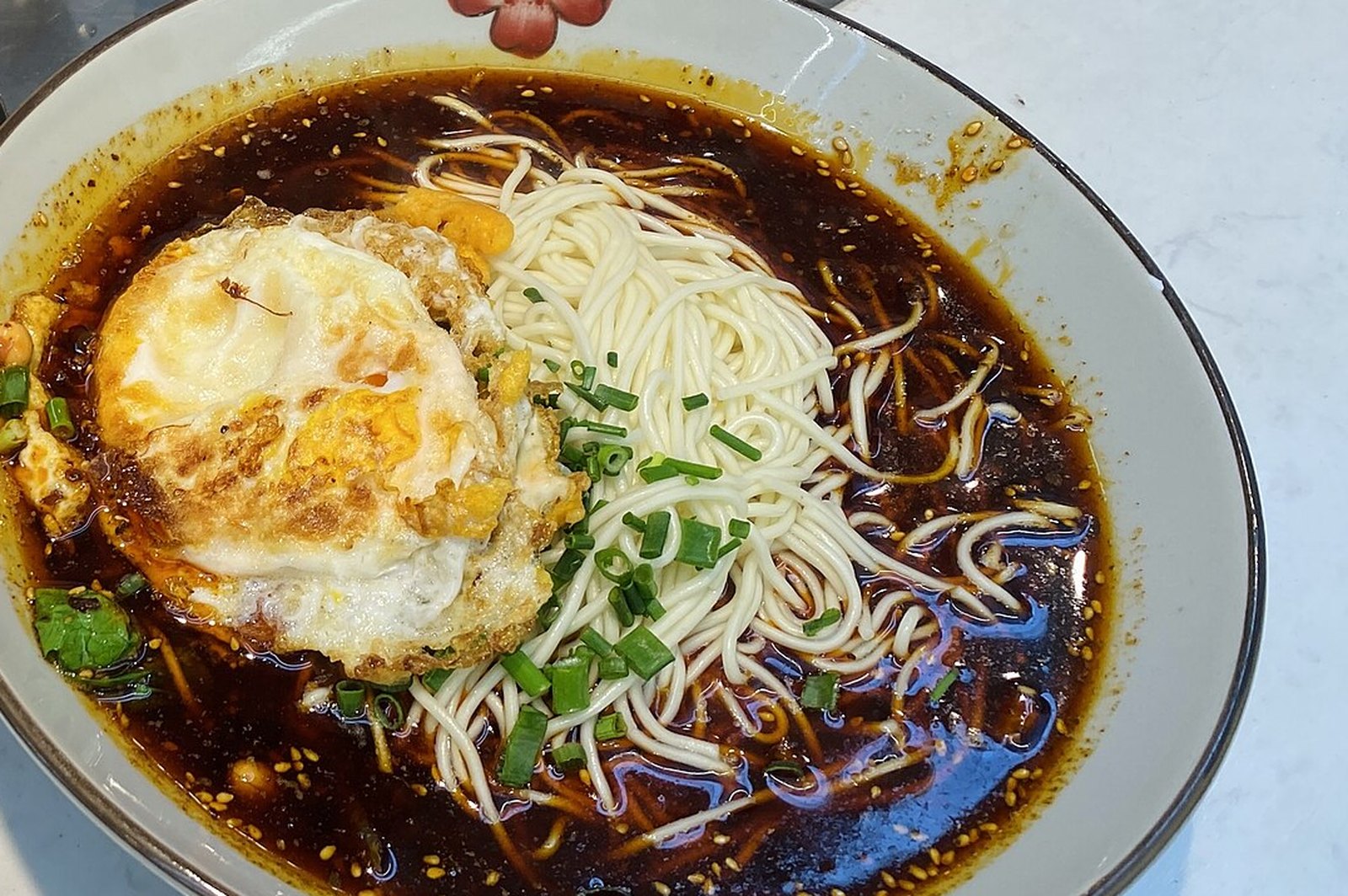
In Singapore, exhaust is not optional. The Singapore Food Agency's requirements for licensed food premises are explicit: fumes from the cooking range must be extracted immediately and treated by an air-cleaning system, then discharged through a hood and flue at or above roof level, facing away and aesthetically screened. This is precisely where many small operators stall when they try to open inside a mall, an office building or a campus. Enclosed mechanical cooking with air treatment eases that constraint — but it is not an exemption: equipment and premises still have to be designed and approved to code.
In April 2026, researchers from the Institute of Policy Studies at NUS's Lee Kuan Yew School of Public Policy asked in The Straits Times whether rising F&B salaries would push operators towards machines faster. Around the same period, Lianhe Zaobao reported on Microkitchen, a vending-style cooking unit from local start-up Rolo Robotics: order by scanning, and the machine takes ingredients from the chiller and cooks them on the spot. Chinese cooking robots arrived in local kitchens earlier still — Wuhan's “Yao Gun Smart Chef” was already working in a canteen kitchen at the National University of Singapore in 2024.
Treat a smart noodle shop as a business and four lines have to add up:
Three cautions, though. First, a quoted serving time is an ideal-condition figure — peak periods and cleaning cycles slow the real pace. Second, the more complex the menu, the smaller the share the machine covers, and the long tail still needs people. Third, equipment solves capacity only; footfall, location and the ingredient supply chain remain the floor the business stands on. A machine saves you labour — not management.
The Smart Dining business of Singapore Global International equips dining environments with smart hardware and digital systems, across campuses, office buildings and commercial spaces. We normally start from the venue type, footfall and budget, then propose the equipment mix and operating plan — including the flow from wok station to serving, payment and cleaning. If you are weighing whether a machine can carry a shop, we can work through the four lines above with you.
Sources: Xinhua's report on the 2026 Report on AI Cooking Robots in Food Service (April 2026); Securities Daily's interview with Yin Ling, secretary-general of the Beijing Cooking Robot Research Institute (September 2026); market estimates by NCBD and the Red Catering Industry Research Institute; related reporting in The Straits Times and Lianhe Zaobao (April 2026); and the Singapore Food Agency's requirements on exhaust for licensed food premises. Compiled and written by Singapore Global International; figures and policies are subject to the latest official publications.
Note on the source video: this article takes its subject from the public caption of a WeChat Channels clip introducing an AI noodle house and an automated noodle-frying machine (its “70 seconds per portion” and “24-hour unattended” claims are the equipment maker's). The body is our own compilation of industry material and analysis; the clip and its original content are not reproduced.
Tell us your venue type, footfall and budget and we will propose equipment and operations.