News · Business · 3 Nov 2026
Why 4,000 multinationals put their regional HQ in Singapore
4,200 regional HQ · 46% of Asia-Pacific · the Fortune 500 list and the reasons
Starting from “4,000”: Singapore's regional-HQ ecosystem and the list
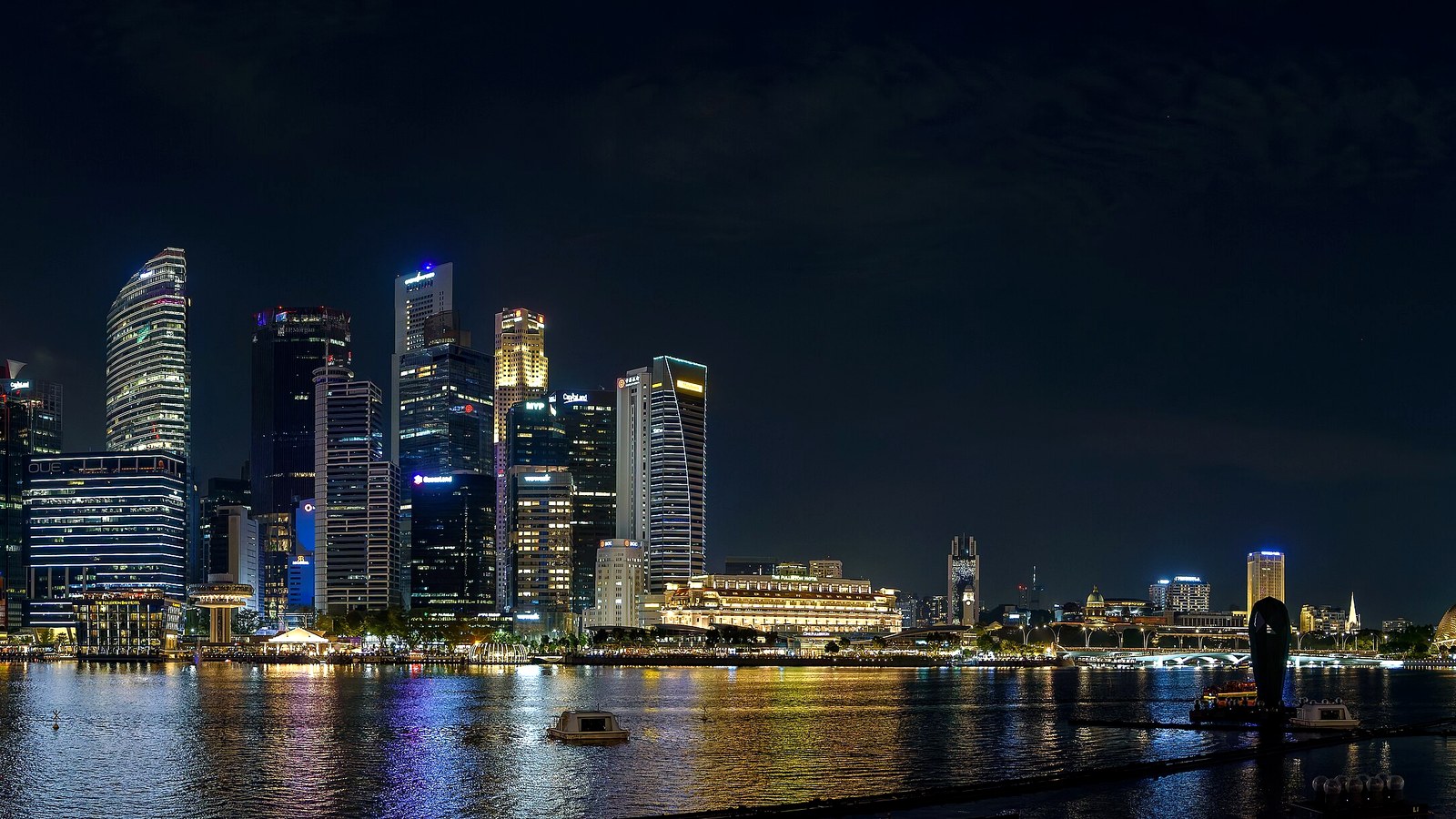
“More than 4,000 multinationals have regional headquarters in Singapore.” The claim appears often in business media and is broadly accurate. The tighter figure: about 4,200 regional headquarters in 2023, roughly 46% of all Asia-Pacific RHQs — more than triple Hong Kong's 1,336.
But “regional HQ” and “headquarters” are two different things, and conflating them produces errors. Let us fix the definitions first, then the list.
1. Three definitions that get mixed up
- Global HQ — where the group's top decision-making sits; usually only one.
- Regional HQ — runs strategy, finance, HR and legal across several Asia-Pacific markets: a command post, not a registration address.
- Fortune Global 500 — a ranking by revenue, covering the world's 500 largest companies by sales. It is a size list, not an influence list.
So “Singapore has 4,000 of the Fortune 500” is wrong — there are only 500 worldwide. The accurate statement: about 4,200 multinationals have regional HQ here, some of which are Fortune 500 members.
2. Fortune Global 500 companies headquartered or registered here (all three)
On FY2024 revenue, only three Fortune Global 500 companies have their operating headquarters in Singapore:
- Trafigura Group — global rank 19, revenue US$244.28bn, ~12,500 staff. One of the largest independent commodity traders (oil and metals). The parent is Swiss/Dutch-registered; the operating centre is Singapore.
- Wilmar International — rank 198, revenue US$67.16bn, ~100,000 staff. Agribusiness and edible oils, with over 400 subsidiaries; a major cooking-oil supplier to China.
- Olam Group — rank 425, revenue US$35.95bn, ~62,500 staff. Food and agribusiness; headquarters and main operations in Singapore.
Note: all three are commodities and agribusiness — a structural feature. Singapore does trading and coordination, not production. That is why manufacturing giants do not appear on the list, even though a great deal of Asia-Pacific decision-making sits here.
3. Fortune 500 firms with regional HQ here, by industry
This list is longer and closer to the common image of “multinationals in Singapore”. Examples by industry (compiled from public sources, not an official register; check each company's own disclosure):
- Tech & semicon: Google, Meta, Amazon (AWS), Microsoft, Apple, Netflix, Salesforce, Oracle, IBM, Cisco, Dell, Intel, Micron, GlobalFoundries, Applied Materials, Sony, Samsung, ByteDance/TikTok, Alibaba (Lazada)
- Finance & insurance: JPMorgan Chase, Citigroup, HSBC, Standard Chartered, Goldman Sachs, Morgan Stanley, UBS, Deutsche Bank, Visa, Mastercard, AXA, Allianz, Manulife
- Energy & chemicals: Shell, ExxonMobil, BP, TotalEnergies, Chevron, BASF, Dow, Linde, SLB
- Pharma & health: Pfizer, GSK, Novartis, Roche, Sanofi, AstraZeneca, Merck, Johnson & Johnson, Abbott
- Consumer & retail: Unilever, P&G, Nestlé, Coca-Cola, PepsiCo, McDonald's, Nike, Adidas, LVMH, Dyson
- Industrial & aerospace: Siemens, Schneider Electric, ABB, Honeywell, GE, Rolls-Royce, Boeing, Airbus, 3M, Caterpillar
- Logistics & shipping: Maersk, DHL, FedEx, UPS, CMA CGM
One angle often missed: Chinese companies are placing regional HQ here too — ByteDance (TikTok's international business), Alibaba (Lazada), Tencent, Huawei, Xiaomi, Shein. For anyone working between China and Singapore, this matters more than the Western 500 list.
4. Why Singapore: five hard reasons
- Location: an eight-hour flight radius covers Asia's major cities — the physical optimum for running Asia-Pacific.
- Rule of law and certainty: common-law system, enforceable contracts, a mature arbitration hub. What a regional HQ fears is not high tax but rules that move.
- Tax: a 17% corporate rate plus incentive schemes for RHQs; the 15% global minimum tax (OECD Pillar Two) is now in force, narrowing the old low-tax arbitrage — the competition is now about substance.
- Talent and language: an English working environment, a bilingual workforce, dense international schools — decisive for expatriate families.
- Connectivity: one of the world's busiest transshipment ports, Changi non-stop to 150+ cities, a data-centre and submarine-cable hub.
5. What this means for education and homestay
A regional HQ brings expatriate families, not single employees. When a regional head relocates, a spouse and two or three children usually come along; the three things parents care about are whether there is a school place, how far home is from school, and who handles daily life.
That is why international schools here run at capacity and homestay demand stays steady. What is scarce is not housing but the service that carries a family through its first three months: school placement, guardian communication, meals and routine, emergencies.
6. My take
First, what “4,000” really shows is not scale but centralisation. These firms put Asia-Pacific finance, legal, procurement and HR in one city — meaning the city holds decision flows, not production flows. Decision flows demand far more talent, education and housing than factories do, and more stably.
Second, after the 15% global minimum tax, “move here to save tax” has weakened and “you need a real team here” has strengthened. That is good for Singapore: it filters out shells and leaves HQs with substance — and those are the ones that actually send people.
Third, for anyone working between China and Singapore, the Chinese list matters more than the Western one. Western 500 regional HQ are long settled; the increment is in Chinese companies going abroad — they need schools, housing, compliance and landing services too, with shorter decision chains and a preference for working in Chinese.
Sources: topic from the video's public title (2026-10-21). RHQ counts and share from Business Times reporting on 2023 data; Fortune Global 500 ranks and revenues from the 2025 list (FY2024), cross-checked via Wikipedia's List of companies of Singapore; Southeast Asia from the Fortune SEA 500 (2026). The industry list is compiled from public sources, not an official register. Original video: https://weixin.qq.com/sph/AibXrIsJDb
Bringing a child to study in Singapore?
From school placement to homestay, that is the part we handle.