Education · Choosing a school in Singapore
Six years on: from which school to which road
In 2020 Ms Bao left her job and her comfortable life in China and moved to Singapore with two children. Six years on, the question is no longer which school to enter but which road to take. A look at Dulwich, Hwa Chong International and Canadian International.
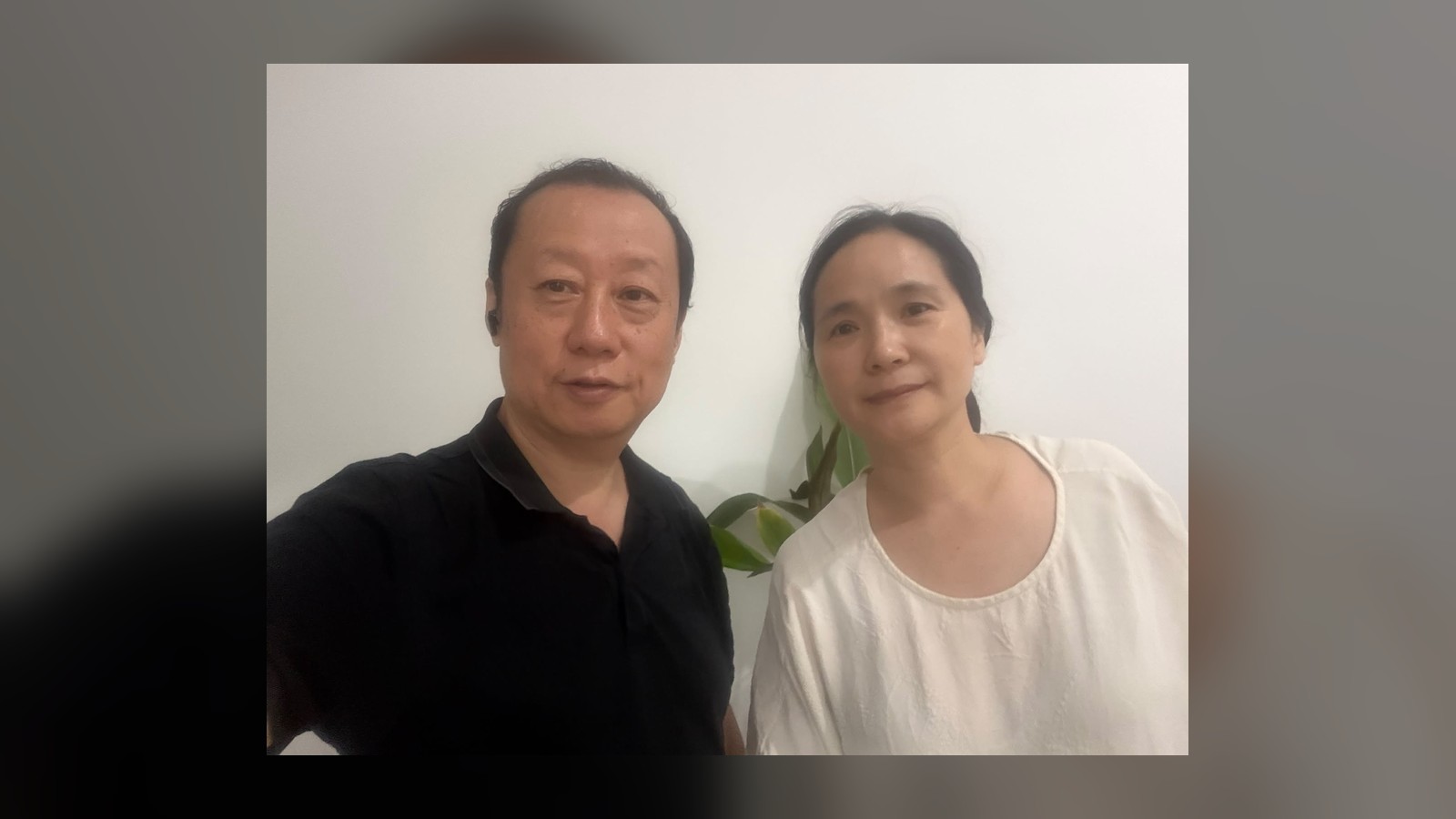
Ms Bao came to Singapore from China in 2020. That year she set aside a familiar home and a steady job, and landed here with two children. Her reason was not complicated: her children's education.
Six years have passed. The children have grown, and her questions have changed: from whether their English could keep up, and whether they could get in at all, to where they should study next and what they should study. It is the question many Chinese families meet in their fifth or sixth year here.
1. Why Singapore becomes the first stop for many Chinese families
First, language: classes are taught in English while Chinese remains a subject, so a child does not lose the mother tongue by studying abroad. Second, curriculum: both IB and the Cambridge route exist, so a family can choose by the child's character instead of being locked into one path. Third, distance and environment: a four-to-five hour flight, predictable safety, order and healthcare, and grandparents can visit.
Those are the shared advantages. The real difference lies in the schools: although all three are called international schools, the students they shape are not the same.
2. Dulwich College (Singapore): British tradition and a global campus network
Dulwich opened its Bukit Batok campus in August 2014 on a site of about five hectares, for students aged 2 to 18: DUCKS (2–7), Junior School (7–11) and Senior School (11–18). It teaches IGCSE followed by the IB Diploma. In 2026 its IB average was 37.7 out of 45, with four perfect scores and 29 bilingual diplomas; the college has about 2,990 students from 64 nationalities.
Its foundation is the house system of Dulwich College in London, founded in 1619, plus a network of campuses across Asia — Shanghai, Beijing, Suzhou, Seoul, Singapore and others. What that means for parents: the school is deliberate about structure, writing, speaking and belonging to a house. For a child who needs clear boundaries and a firm academic rhythm, this tends to fit.
One caveat: an IB average reflects one cohort and is heavily shaped by intake, so it is not the sole measure of teaching quality. The better question is how much a student grows between entry and exit.
3. Hwa Chong International School: an international school with local roots
Hwa Chong International was established in 2005 with the support of Singapore's Ministry of Education and Economic Development Board, as part of the Hwa Chong family of schools. It is not a foreign school operating in Singapore but a local international school: at least half of its students are Singaporean, the rest come from more than twenty countries.
The curriculum is a six-year integrated programme: from secondary school straight through to the IB Diploma in Year 6 (Grade 12), without switching systems. The school also runs a residence, HCIS Residence, which is a practical option for a child coming from China alone: no accompanying parent required, and daily routine and evening study are supervised.
Its character is more Asian: bilingual, disciplined, values-driven, academically demanding — close to how Singapore's top local schools operate. It suits families who want their child inside the Singapore system while keeping Chinese language and Chinese family values.
4. Canadian International School: a full IB continuum and bilingual programmes
Canadian International School was founded in 1989 by a group of Chinese-Canadian investors and opened in 1990 as the Canadian Overseas College. Its campus today is at Lakeside in the west (7 Jurong West Street 41), taking students from nursery to Grade 12: about 3,100 students from more than eighty nationalities.
The curriculum is the full IB continuum — PYP, MYP and DP — one system from start to finish without changing tracks. It also runs Chinese-English and French-English bilingual streams, with two languages used in class from the early years. For Chinese families, that often matters more than a ranking.
5. Choosing among three roads: a question of fit, not of ranking
Seen together, the differences are clear. Dulwich is British house tradition plus a global network, IGCSE into IB, structured management. Hwa Chong International is a local international school with a six-year integrated route straight to IB, stronger bilingual and disciplinary emphasis, with boarding. Canadian International is a full IB continuum from nursery to DP, with bilingual streams as its signature.
So five questions are worth more than a ranking table. First, where does the child stand in Chinese and English, and can the school meet that level? Second, IB or Cambridge, since the two assess differently. Third, where the family lives: Bukit Batok, Bukit Timah and Jurong West are in three different parts of the island, and commuting time changes a child's day. Fourth, how much supervision the child needs: some thrive in structure, others need room. Fifth, fees and accompanying-parent arrangements — these differ by school and should be checked against the current published figures; no numbers are quoted here.
6. After six years, the question changes
Back to Ms Bao. Six years ago she asked which school would take her children; today she asks which future suits them. Between those two questions lie six years of school runs, parent meetings, examination seasons and countless conversations at the dinner table.
It is also what we remind families most often in our education work: a school offers a path, not an answer. Choose the right path and the child can walk it; choose the wrong one and even a good school only adds years of strain.
If you are facing the same question, tell us your child's year group, language level and rough plans. We will set out what is known about the three schools and say plainly where we are unsure — which is more useful than a polished promise.
Want to talk through your child's path?
WhatsApp +65 8134 8593 — we will be clear about what is known, and say so when it is not.