Life · Friends
Visiting old friends at Quanyuan Community
We met Shengli and his wife in 2013 after arriving with our children; thirteen years on, a return visit to 1 Orchard Road. A note on friendship, children and the same Father.
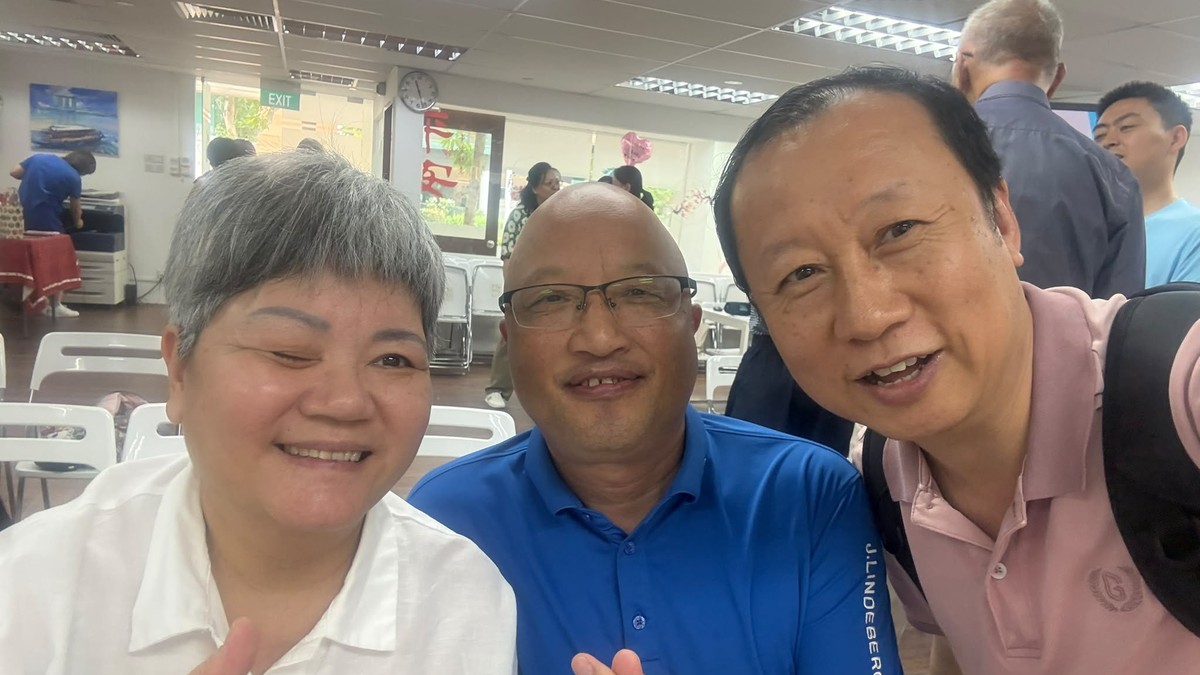
An afternoon in November, 1 Orchard Road. The door opened onto Quanyuan Community, already busy: rows of white chairs, a clock on the wall. Shengli and his wife came over, smiling exactly the way they did thirteen years ago.
In 2013 we arrived in Singapore with our children knowing almost nothing: how to choose a school, how to rent a place, where to take a child who fell ill. Shengli and his wife turned up in exactly those days.
Thirteen years have passed. Our children went from primary school to adulthood; we went from strangers to acquaintances, and from acquaintances to people who no longer need pleasantries. The rarest thing between friends is not constant contact but being able to sit down after a long gap and speak plainly.
There is a closer layer: the children. Shengli's daughter and her husband were introduced by my wife. The two of them went from meeting to marrying, and our two families went from friends to something like relatives. Seeing them stand together brings back the girl who once carried a school bag.
That day everyone crowded in for a photo. One gave a thumbs-up, one made a finger heart, one simply laughed. It is not a flattering photograph, but it looks like us.
1. Why we ended up together
In the end it is because of the same Father in heaven. We did not become friends first and then talk about faith; within that faith we came to know each other slowly — what the other prays about, and which seasons were hard.
That kind of knowing is not loud. It mostly happens over a meal, a visit, a single question about how things really are. Thirteen years have accumulated exactly that.
So when we say we have grown by supporting one another, it is not politeness. Living abroad, what is scarcest is not money but someone who remembers you when you are weak and tells you the truth when you drift.
Over thirteen years we have each moved house, changed jobs, lost people we loved. None of that travels well over a chat app; sitting down, it is covered in the time it takes to eat a meal. What a person far from home needs most is not someone to run errands, but someone who remembers which loss once hurt.
Children grow up watching this. They may not recall the lectures, but they remember who came when the family was in trouble, and who drove them to hospital at night. This cannot be taught; it can only be witnessed.
Faith passes down the same way. Not by how well it is explained, but by what a child sees at the table: adults still praying in difficulty, still willing to yield in disagreement, still giving away their time when someone else is in need.
Gratitude, we say, but gratitude has a shape: a card written by hand, a return visit, a meal, a sentence spoken when someone needed it. What we did today was return a little of what we received over thirteen years.
2. A child growing up in this city
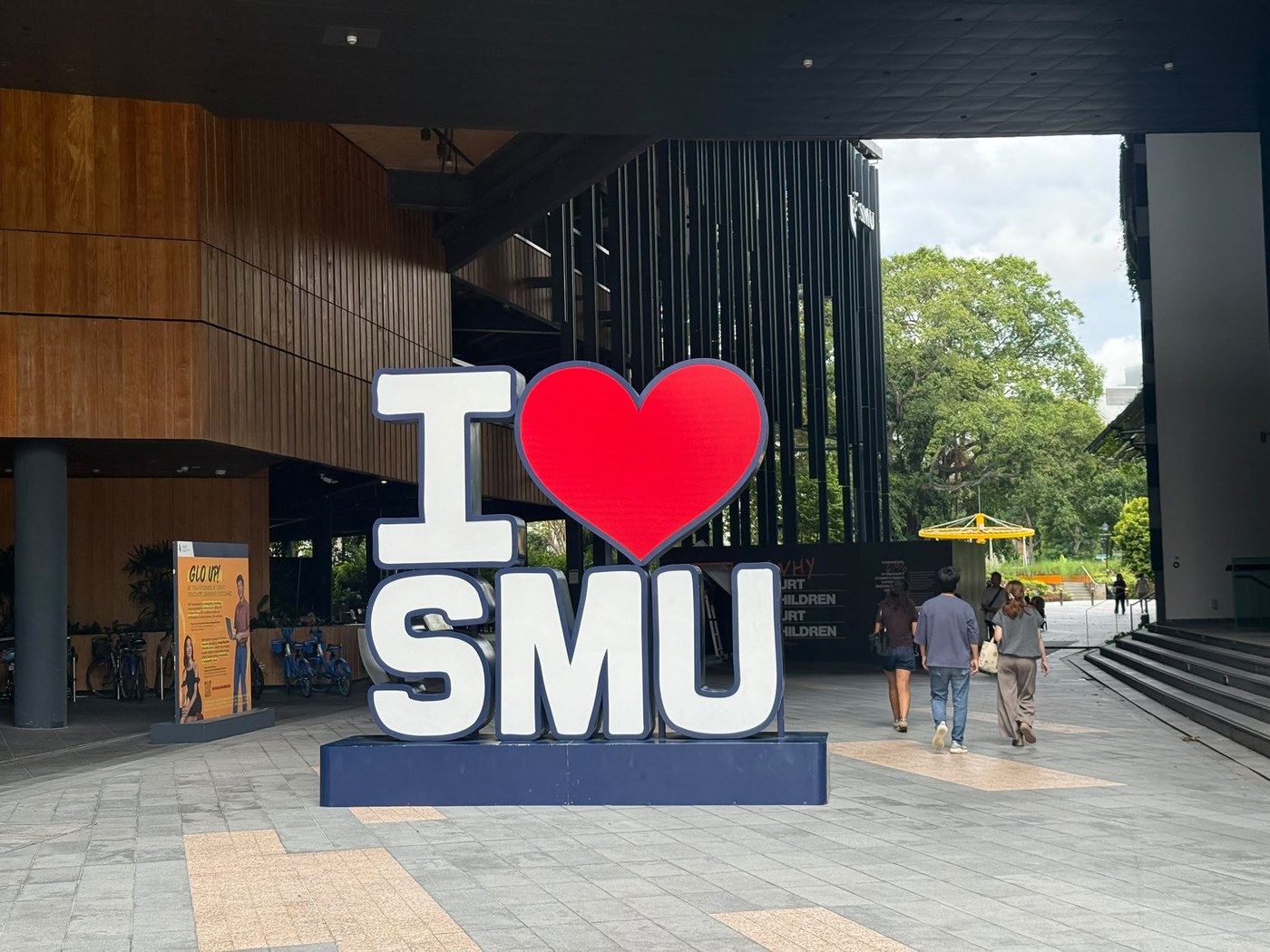
The place where we met that day faces Singapore Management University. Our child arrived in 2013 in Primary One; today they study at the university across the road. The coincidence only landed while sitting in the audience.
SMU is not an old university: incorporated in January 2000 as Singapore's first American-style, seminar-based autonomous university. Its campus sits in Bras Basah, downtown, without walls — several buildings threaded through the city blocks, the library connected to the MRT. By its own published figures, in September 2026 it had 10,621 full-time undergraduates; the schools have grown from a business school to accountancy, economics, information systems, law and social sciences, plus a college of integrative studies and a graduate college.
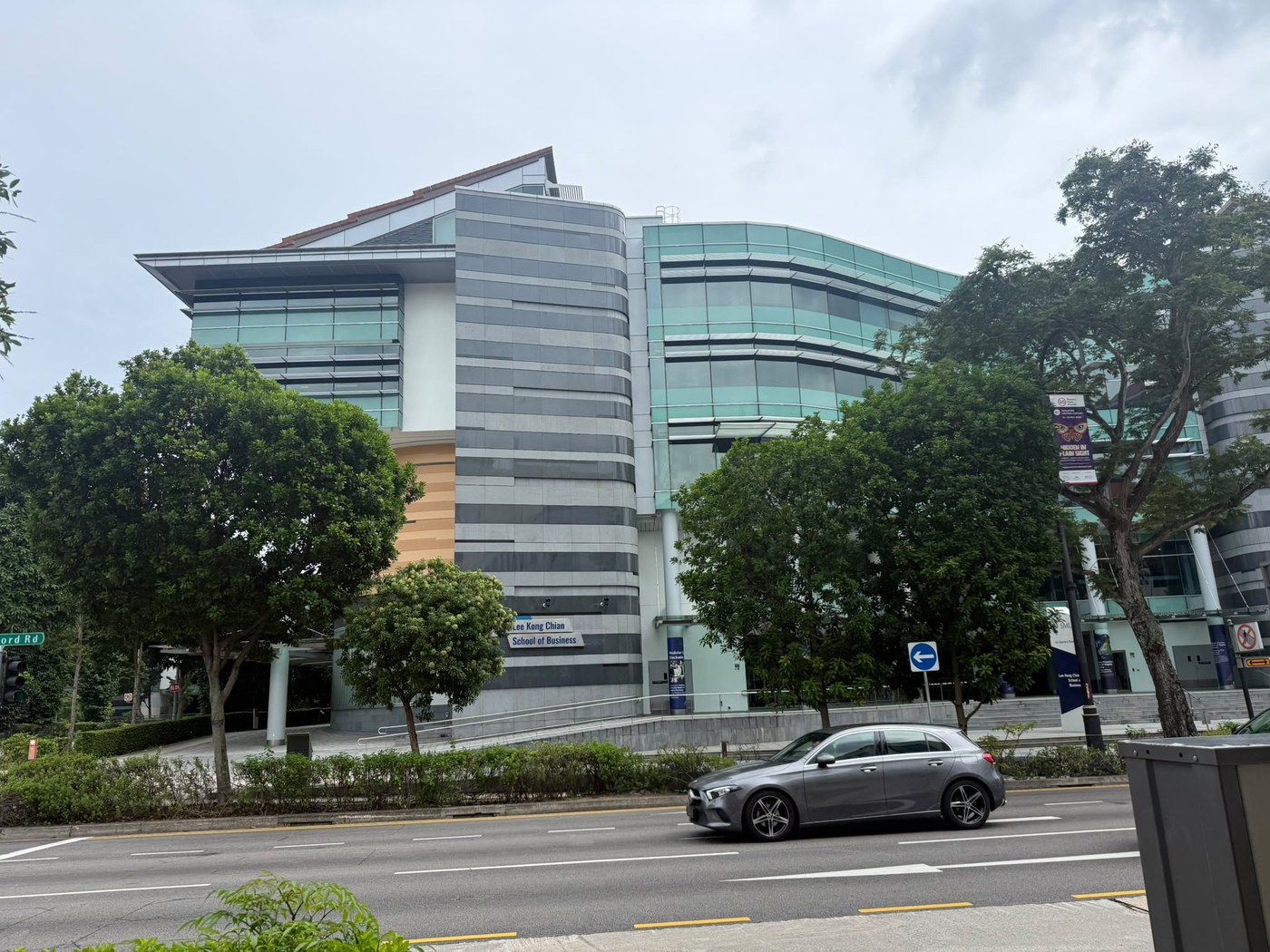
SMU has no wall around it. The business school stands right at the street corner; cross one road and you are in class. The library, the MRT and places to eat are all connected. That daily commute is a convenience the city provides — and something we did not anticipate when we decided to move here.
From Primary One to university lie thirteen years and several forks: government school or international school, which route after O levels, which subject at university. None of these has a standard answer, only whether the shoe fits. We made mistakes and changed direction; what can be said is that the child has grown into someone able to decide for themselves in this city.
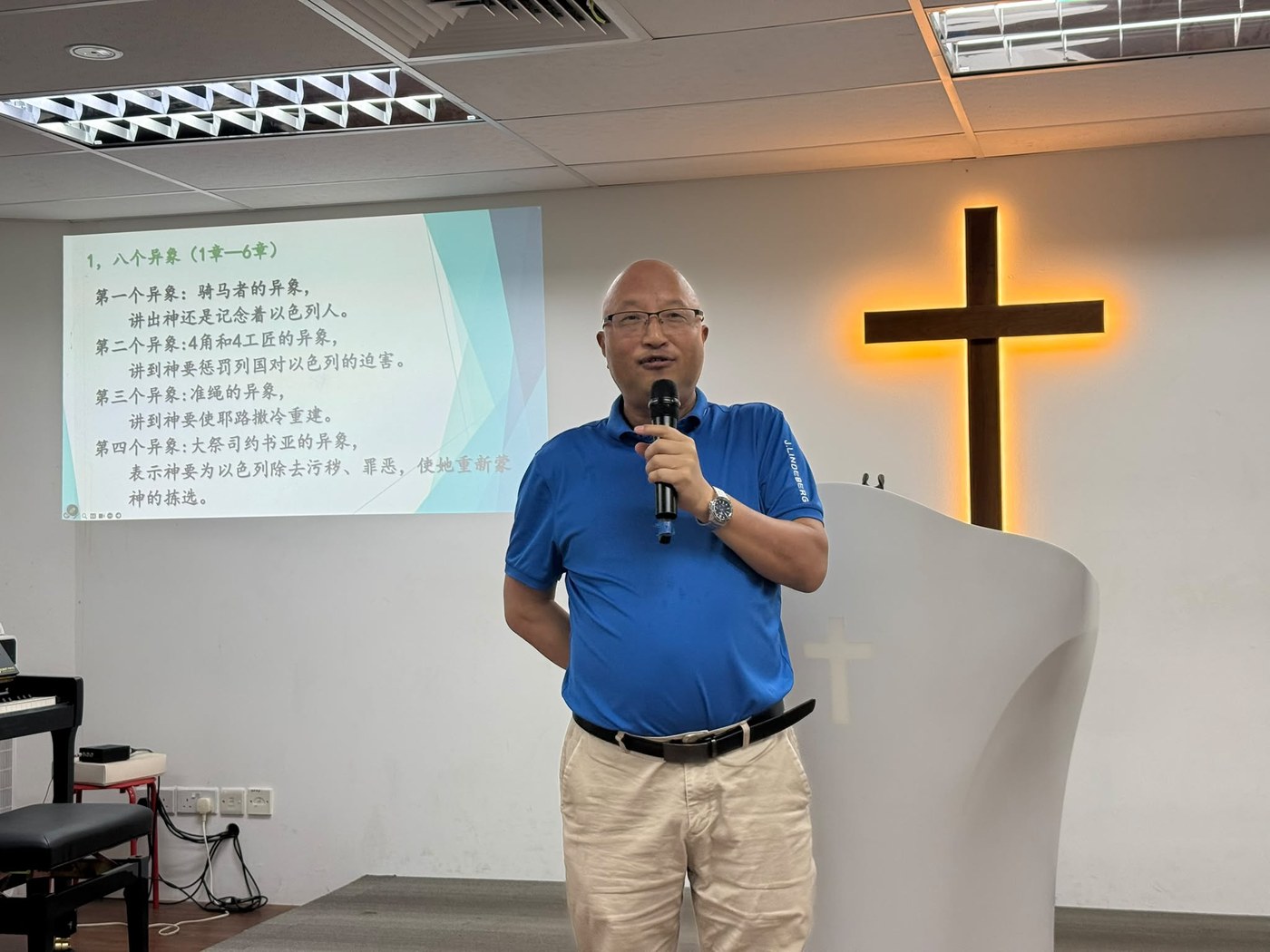
The screen listed the eight visions of Zechariah 1–6: the horsemen, the four horns and four craftsmen, the measuring line, Joshua the high priest. The passage speaks of God remembering His people, and of rebuilding — first pulling down what must go, then measuring out what is to be built.
3. Thirteen years later
It was already dark when we left. Orchard Road was full of people, the lights coming on one by one. In the car a child asked when we would come again. I said: not too long.
Thirteen years ago we were the family asking for help. Thirteen years later we are a family others can lean on. That change was not our own doing.
Now that the children are grown, the times the whole family sits down to one meal are few in a year. So each one is worth recording: raw meat, tofu, bean curd rolls, a pot each, nobody having to accommodate anyone else's taste.
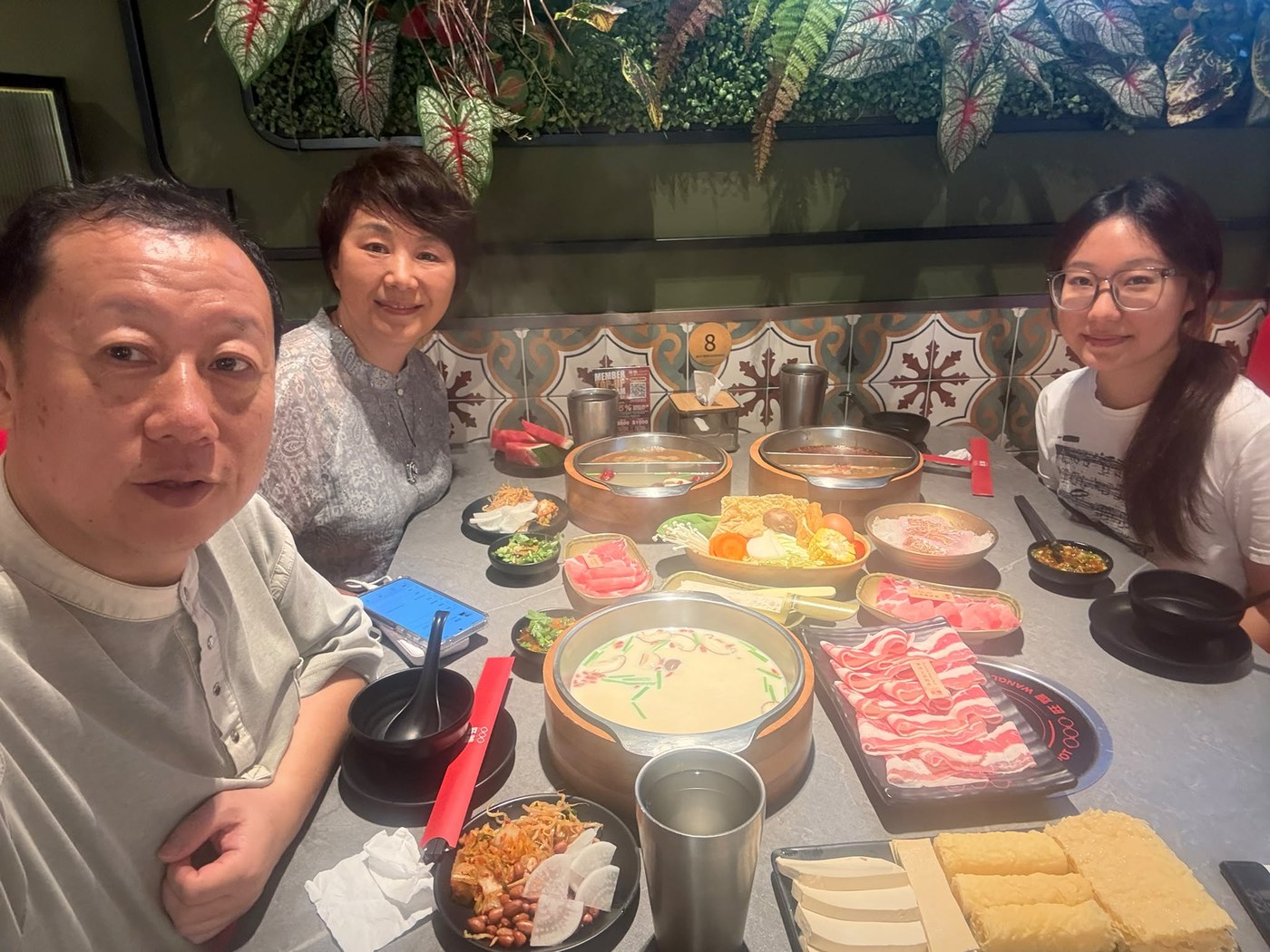
May this friendship continue, and may the next decade still find us in the same place, sitting down for a proper conversation.
Putting down roots in Singapore too?
WhatsApp +65 8134 8593 — about schools and somewhere to live.