Witness · At the city's edge
Visiting Brother Shi: a family's road, seen from a Singapore dormitory
Singapore's migrant worker dormitories, how the state regulates them, and ministry among the diaspora.
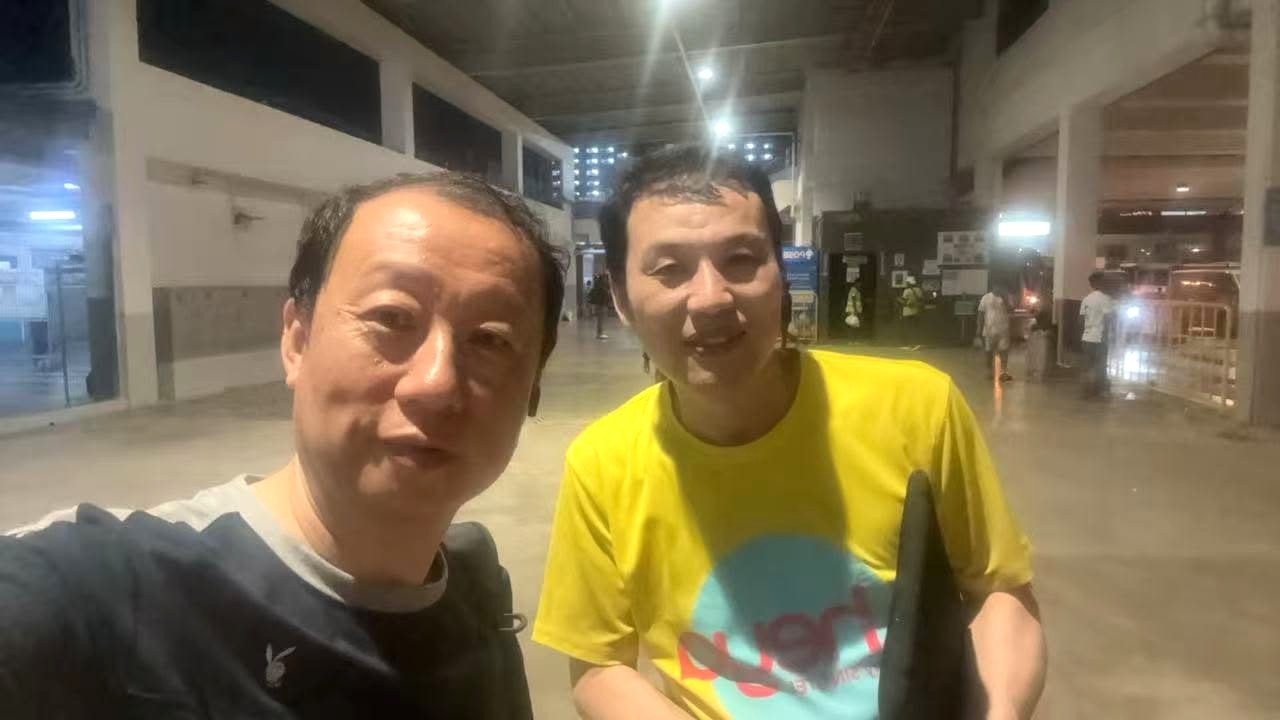
We met Brother Shi that evening. He works in construction and finishes late, so we sat for a while near the dormitory area and talked about family, and about what comes next.
I will not write his private story — where his hometown is, how many mouths at home, how much he remits each month. That is his to tell. What I want to describe is the environment he lives in: a migrant worker dormitory in Singapore, and the system that governs several hundred thousand people.
1. What the dormitory is like
Singaporeans call them migrant worker dormitories; the workers themselves call them labour camps. There are three main kinds: purpose-built dormitories (PBD), factory-converted dormitories (FCD), and construction temporary quarters (CTQ). The largest house tens of thousands of men, with canteens, supermarkets, remittance shops and basketball courts — a town behind a fence.
Rooms are usually bunk beds, eight to twelve men to a room, sharing bathrooms. Corridors are hung with laundry, and at ten at night the lights are still on because the next shift has not come back.
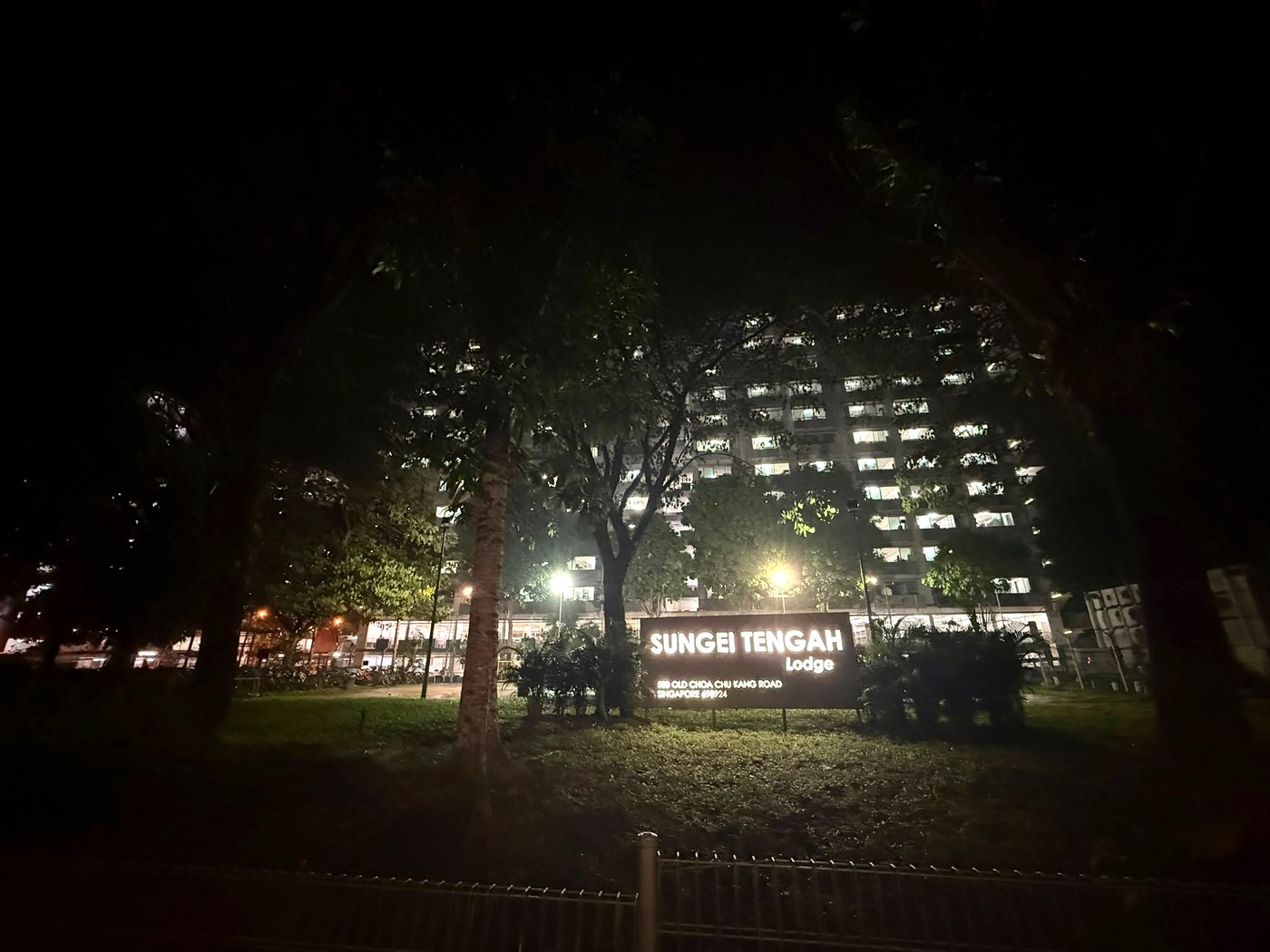
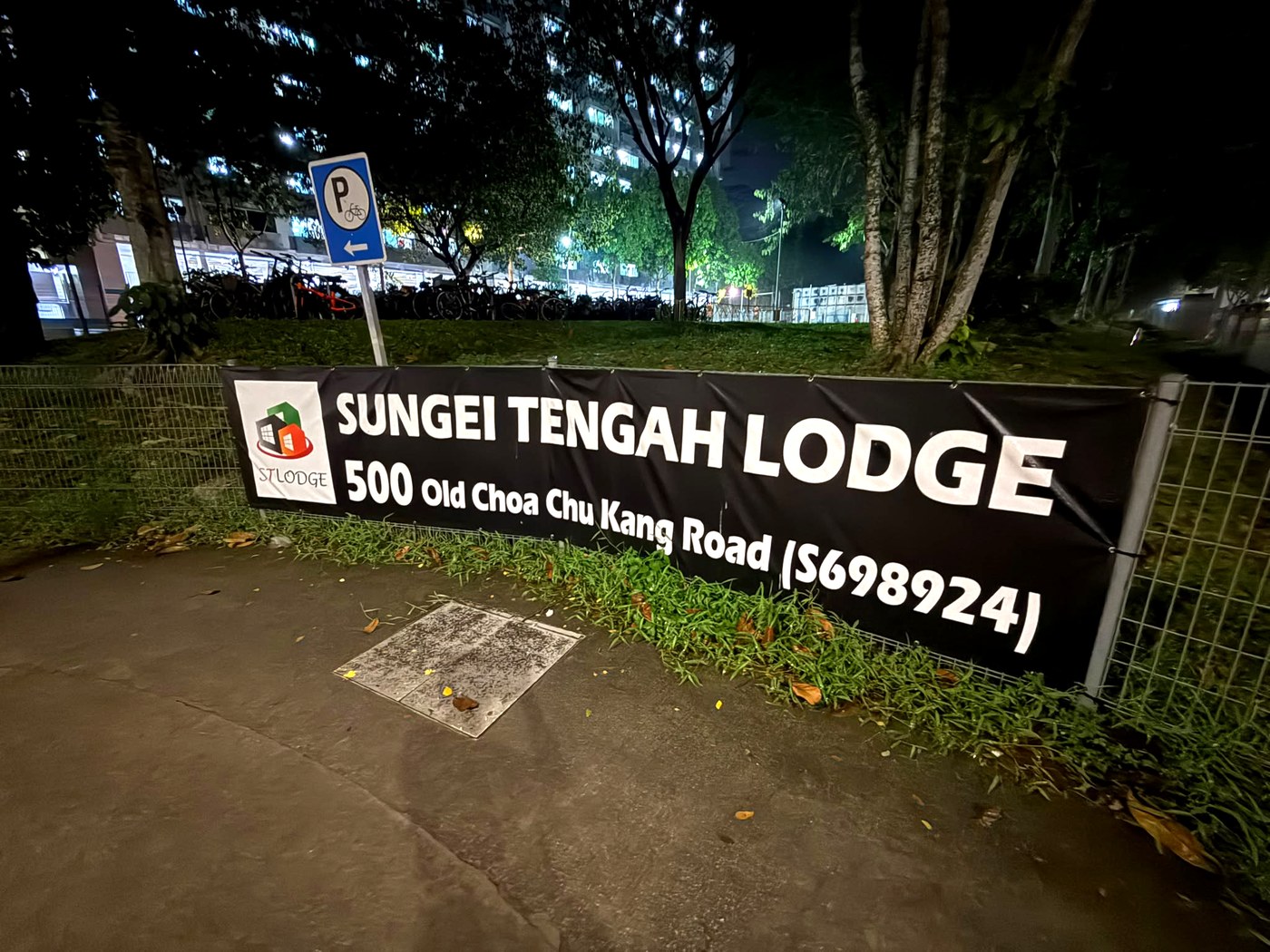
The one we visited that night has a sign at its gate: Sungei Tengah Lodge. It is Singapore's largest purpose-built dormitory — ten blocks of thirteen storeys, designed for about 25,000 residents. Looking in from the gate, the blocks lit up row upon row, like a small town.
2. How the government regulates it
The main regulator is the Ministry of Manpower. Construction workers hold a Work Permit, applied for by the employer, not by the worker. The employer posts a S$5,000 security bond for each non-Malaysian worker and buys medical insurance of at least S$15,000; first-time workers attend a one-day Settling-In Programme covering the law, safety and where to seek help.
Housing is regulated too, under the Foreign Employee Dormitories Act 2015. Today even a seven-bed premises needs a licence. The conditions are specific: at least 4.5 square metres of living space per resident, no more than 12 residents per room, at least one bathroom per six residents, plus cooking, laundry and recreation space. Dormitories approved after September 2021 must meet a higher standard still.
3. The gaps in the system
The Work Permit is tied to the employer. Changing jobs requires the old employer's consent, a new application, and quota. So “dare not complain” becomes the most common form of self-protection. Unpaid wages, excessive hours, agent fees, passports held by others — these are not legends; they appear in labour disputes every year.
Then there is language. Site English is simplified, and it is not enough at a clinic, a police post, or when signing a contract. Illness is what they fear most: one man with a fever and the whole room tenses.
The 2020 pandemic put all of it in daylight. Dormitories became Singapore's largest cluster, tens of thousands of workers were infected, and the dorms were locked down. Only afterwards were standards raised across the board — many changes were forced by that year.
Others have worked on this for years: alongside the ministry, the Migrant Workers' Centre under the labour movement, TWC2 and HOME help with wage claims, medical care and legal cases.
4. Ministry among the diaspora
The word diaspora originally means a people scattered from home. Chinese migrant workers are a textbook case: far from home, gathered in a foreign dormitory, half-fluent in the local language, with a social circle made of people from the same province.
Many Chinese churches here run migrant worker ministries: Sunday gatherings, literacy classes, visits, accompanying someone to a clinic, help with letters and remittances, dumplings at festivals. None of it is grand, but to a man far from home it says: someone remembers me.
“Do not mistreat or oppress a foreigner, for you were foreigners in Egypt.” (Exodus 22:21)
Again and again God says the same thing to Israel: you too were foreigners in Egypt. So welcoming the stranger is not extra charity; it is remembering that you were once a stranger. Jesus puts it plainly: “I was a stranger and you invited me in” (Matthew 25:35).
5. One family's turn
The wedding a few days ago is one outcome of this kind of work. The bride's father also works in construction; he came from northern China and has worked here for years, bringing his daughter into a church and into a school. She arrived at seven with no English, and twenty years later was married in an English congregation.
There were no wedding sweets, no red eggs, no toasts that day. But one thing was clear: this family's road turned a corner. What turned it was not money; it was people willing to spend time.
That night I thought of a line: different people, different thinking, different outcomes. In the same dormitory block, one man drinks after work, one studies English, one goes to church on Sunday. Ten years on, the three are on entirely different roads.
6. What a church can do
Three small things. Go: a visit needs no reason; sitting down for tea is enough. Accompany: clinics, remittances, paperwork — this company comes before preaching. Speak: tell the gospel in words he understands, without jargon or slogans.
And one more: remember. Remember that they are not “labour”; they are someone's father, son, husband.
When we parted, Brother Shi waved, smiling. The dormitory lights were bright on the road back. He walks that road alone — but he need not walk it alone.
“Do not forget to show hospitality to strangers, for by so doing some people have shown hospitality to angels without knowing it.” (Hebrews 13:2)
Do you care about this community too?
To join a visit or a migrant worker ministry, WhatsApp us: +65 8134 8593.