Health · New business models
No handbags, no watches — it sells healthy years
Three floors and 80,000 sq ft at 10 Coleman Street, opened in August 2026: 56 baseline health metrics on level three, cryotherapy and hyperbaric oxygen on level two, healthy dining and functional retail on the ground floor. A closer look at the business model behind Singapore's "longevity mall".
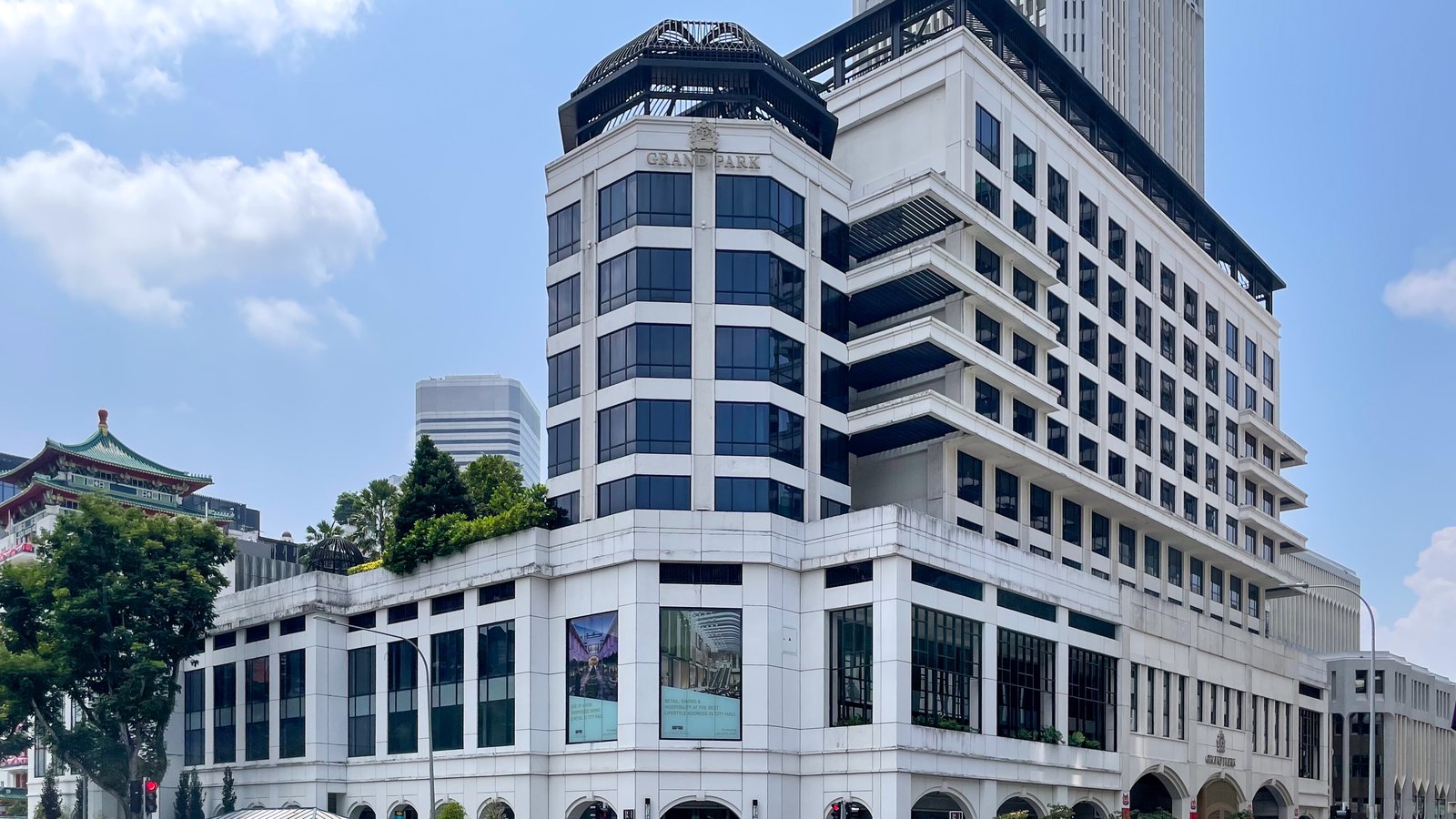
In August 2026 a building that does not quite behave like a mall opened at 10 Coleman Street in downtown Singapore. Three floors, about 80,000 sq ft, no luxury boutiques, no cinema; the sign reads “Longevity World”. Media call it one of the world’s first malls built around whole-body health. The money behind it belongs to Allen Law, founder of the local hotel group Park Hotel Group and principal of Seveno Capital.
The route through it is fixed. Go up to level three for testing and leave with a “body map”; go down to level two for cryotherapy, hyperbaric oxygen, red-light and hydrotherapy; end on the ground floor for food, functional products and company. The building does not sell a product so much as a path — from measurement to intervention to daily life.
1. Level three: a “body map” first
Level three is operated by MORROW Medical, run by Longevity & Lifestyle Medical Pte. Ltd. and licensed by Singapore’s Ministry of Health under the Healthcare Services Act.
The assessment is not a blood draw and done. Public materials list VO₂ max, DEXA body composition, strength and power tests, lung function, a full blood panel, mental-health screening, ECG and vital signs — 56 baseline physiological metrics in all. What comes back is not a lab sheet but a prioritised plan: which items need attention now, and which can be moved by training and nutrition.
The logic is plain: establish a baseline. Without one, the cryo chamber and the hyperbaric suite are just experiences; with one, the same machines can be explained as “your protocol”.
2. Levels two and one: private-club equipment moved into a mall
The MORROW club on level two is the part that ends up in short videos: a ‑110°C whole-body cryo chamber, hyperbaric oxygen, a red-light room, a snow room and contrast hydrotherapy pools.
Such equipment used to sit in professional sports teams, private clinics or tycoons’ homes. Longevity World puts it in a public commercial space and turns it into something you can browse, try and buy by the session — the most fundamental difference from a high-end gym.
In the video the narrator explains the route by age: basic testing in your thirties and forties, functional training in your fifties and sixties, strength and nutrition in your seventies and eighties. What he is selling is not eldercare but a shift in when health spending starts — from “once you are old” to “before you age early”. That framing is closer to the real customer than the word “longevity”: what is on sale is not extra years of life, but delaying the years of disability.
The ground floor is restaurants, health food, functional apparel, wearables and skincare. The logic is continuity: level three finds the problem, level two intervenes, the ground floor turns the intervention into habits and goods you take home. Opening hours are 10:00–22:00, Monday to Friday.
3. It breaks “longevity” into six pillars
Allen Law puts it this way: the foundation of a long, healthy life is lifestyle medicine, and it rests on six things — nutrition, movement, stress management, sleep, avoiding harmful substances, and positive social connection.
What unites them is that they cut across genes, family history and disease exposure — whoever you are, all six apply. So he puts them on one site: some as a service, some as retail, some as food.
4. A line that must be stated: what Singapore allows
Allen Law concedes it himself: longevity medicine is a young field, and what is permitted varies widely between countries.
In Singapore, intravenous drips and stem-cell therapy are currently not permitted for commercial projects of this kind; in neighbouring Thailand and Indonesia they are already written into clinical protocols. His explanation: “It is not that these therapies have no scientific basis, but that the evidence is not yet strong enough.”
For Singapore this is a strength, not a handicap. Only a place that refuses to improvise can carry the word “trustworthy” — if stem-cell packages were sold here too, it would be indistinguishable from the venues in Bangkok and Bali.
5. Where the money comes from
According to MORROW’s official release of August 2025, founder Allen Law plans to commit US$156 million (about S$200 million) over five years to opening MORROW sites, of which US$15.6 million (about S$20 million) goes to the fit-out and technology of the Singapore flagship. That flagship occupies 45,000 sq ft across two floors inside this 80,000 sq ft Longevity World.
On pricing, the company website publishes no rate card. A two-minute clip by narrator Liu Jun, “Second Half of the Wellness Track”, gives these figures: an entry assessment at S$599 per three months, a health programme at S$3,498 per three months, and membership from S$2,199 to S$8,899. Those numbers come from the narration and are reproduced as such; check official pricing before paying.
The model itself is simple: membership plus health programmes. What differs is the bundling — testing, doctor interpretation, equipment use, food and retail on one bill, turning four separate spends at a clinic, a gym, a spa and a restaurant into one annual line item.
6. Why Singapore
Singaporeans live long, but the years spent in good health have not kept pace. A 2023 study in The Lancet Public Health put life expectancy at about 85.4 years and healthy life expectancy at about 74.1 — more than a decade lived with declining function.
For business, that decade is the market: not curing disease but slowing decline. For public healthcare it is pressure: chronic illness, caregiving and spending all sit in those years.
So the site selection logic is not just “rich people live here”. Three other conditions matter: clear medical regulation (an MOH licence draws a line between medicine and wellness), a dense high-net-worth population, and a region already familiar with the idea of healthspan.
7. Three risks worth stating plainly
First, capital intensity. 80,000 sq ft over three floors, cryo chambers and hyperbaric suites are expensive to build and to maintain. Revenue per square foot must be carried by membership fees and repeat visits; if footfall wobbles, the cost structure is harsher than a normal gym’s.
Second, the boundary between medicine and commerce. Put serious medicine in a mall and the obvious question follows: is this clinical evidence, or an expensive wellness placebo? Cryotherapy, red light and hyperbaric oxygen have research support in sports recovery; on extending lifespan, the academic jury is still out. The building’s answer is to hand the medical side to a licensed operator and keep the experience side in the mall — a correct division of labour, but readers should still know which item carries a doctor’s signature and which is merely an experience.
Worth noting: the clip opens with “second half of the wellness track — manage health early, stretch out the years of high quality life”, then closes with a disclaimer: “footage from the internet, literature and news analysis”, “not medical advice, science communication only”. One line raises expectations, the other returns responsibility to the viewer — and that boundary is the most honest thing about this kind of content.
Third, accessibility. The customer base skews upper-middle income. MORROW says it wants to “democratize healthspan”, but an assessment from S$599 to annual fees in the thousands keeps it some distance from “mass market”. What it may genuinely change is middle-class habit: turning the annual check-up from an administrative ritual into active management several times a year.
8. What this means for Chinese families in Singapore
For families here on student passes and for long-term Chinese residents, the change is in the shape of a check-up: from “once a year, done in a morning” to “a place you can keep going back to”.
But settle three things before you go: what tests are actually included, whether pricing is transparent, and who interprets the results. If any of the three is unclear, do not pay yet.
9. Three lessons for local businesses
First, the space is the product. “Three floors, one route, one loop” sells better than any single service because it lowers the customer’s decision cost — no assembling a clinic, a gym and a restaurant yourself.
Second, the route is the protocol. Diagnose on three, intervene on two, live on one — the order cannot be reversed. Sell goods before testing and you have an ordinary mall with a check-up centre attached.
Third, membership is cash flow. In wellness the profit is not in the single visit but in renewal — which is also the hardest part to read and the easiest to overvalue.
Ten: a second video's claims, and one number to check

On 12 September 2026 the account 金龄银发研究院 posted a video on the same subject, with more traction than the one we cited. Its claim: the mall represents over 1 billion (RMB) of investment, it is a business of vitality, and its verdict is that a good later life is not prepared at 60 — it was decided much earlier.
The "over 1 billion" figure needs its basis stated. MORROW announced US$156 million in August 2025, roughly RMB 1.1 billion at the time. If "over 1 billion" means that raise, the number checks out — but it is not "RMB 1 billion spent building this mall". A company's fundraising is not the building's construction cost. The two are often merged into one sentence.
Note: the web version of this video provides only the cover and a one-line description. There is no audio stream, so the narration cannot be transcribed; this section therefore quotes only its page text, not the spoken content.
Conclusion
Whether Longevity World succeeds is too early to call. In its first month social feeds filled with check-in videos; what decides it is month eighteen — whether members renew, whether doctors and coaches stay, whether the functional goods downstairs get bought twice.
But one thing has already happened: Singapore’s commercial property market now has a new kind of listing — no handbags, no watches, but “how many healthy years you have left”. Whether that business holds up, the next two years will tell.
Sources: MORROW official release (26 Aug 2025); Seveno Capital announcement; Longevity World website (address, opening hours); Lianhe Zaobao and Chinese-language media coverage of Longevity World (Aug 2026); MORROW and MORROW Medical websites; Global Burden of Disease study, The Lancet Public Health (2023); narration of the Chinese short video “Second Half of the Wellness Track” (Liu Jun, about 2 minutes). Prices are quoted from that narration, are not officially published, and are for reference only.
Want to talk health and longevity business in Singapore?
WhatsApp +65 8134 8593. Figures need sources; prices need verification.