Health · Food
Leftover kelp, reheated in a microwave: nutrition, iodine and the three real risks
Kelp is nutritious, but its iodine level is startling; the real risks of reheating leftovers are bacteria, nitrite and a misidentified species — not microwave radiation.
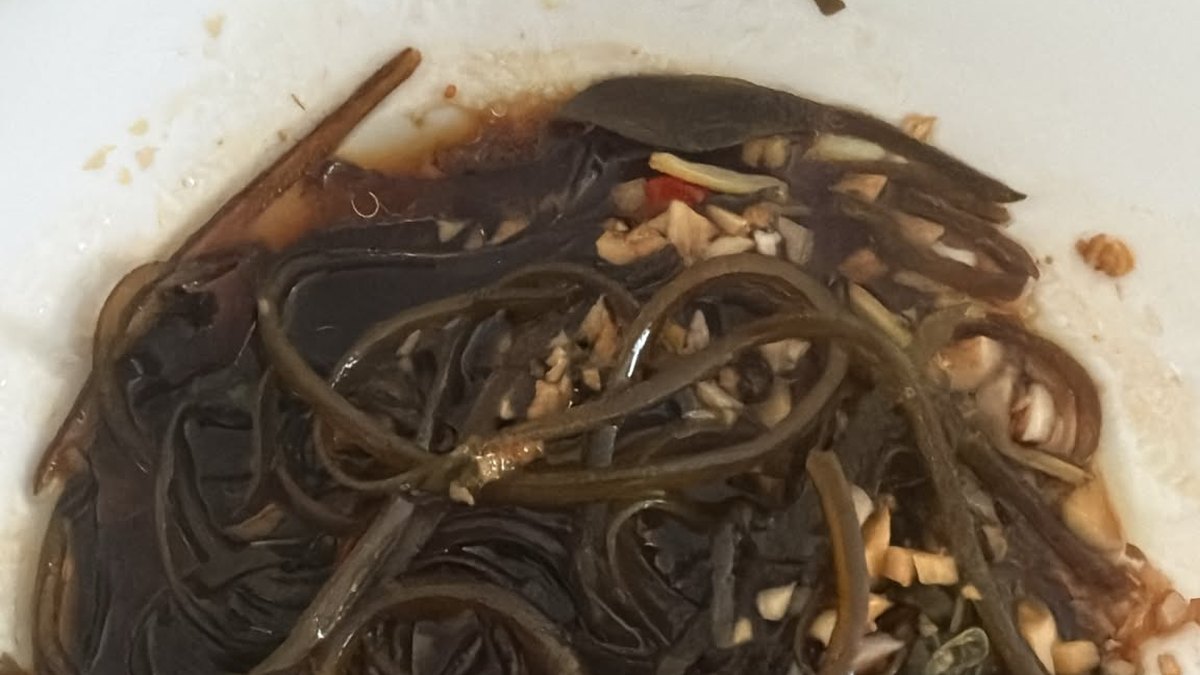
A plate of dressed kelp noodles goes into the fridge, and the next day it is reheated for two minutes. Online warnings say overnight dishes are toxic and microwaves create carcinogens. Both claims are too broad. Taking kelp on its own, the picture is clearer: what the nutrition is, where the risks sit, and what the microwave actually does.
First, the conclusion
Leftover kelp is fine to eat if it was refrigerated, finished within 24 hours and reheated thoroughly. A microwave does not create toxins; it is only a heating method and leaves no radiation behind. Three things deserve attention: bacterial growth, rising nitrite, and too much iodine. There is also a trap unrelated to leftovers but easier to miss — buying hijiki and treating it as ordinary kelp.
What is actually in kelp
According to USDA FoodData Central (seaweed, kelp, raw), 100 grams contains roughly:
- 43 kcal, 1.7 g protein, 0.6 g fat, 9.6 g carbohydrate, of which 1.3 g is fibre
- 168 mg calcium, 121 mg magnesium, 89 mg potassium, 2.85 mg iron — a mineral density higher than most leafy vegetables
- 233 mg sodium, plus about 66 µg of vitamin K
- Alginate and fucoidan are the water-soluble fibres unique to brown seaweed
Fresh kelp sold in Chinese markets holds more water, so 100 grams carries fewer calories; counting the calories of a large plate is not very meaningful. What matters is the dressing: a spoon of soy sauce, a little sugar, a spoon of sesame oil, and both calories and sodium climb. The plate in the photo is covered with plenty of minced garlic and chilli, which makes it punchy — all the more reason to watch the oil and salt in the dressing rather than the kelp itself.
Iodine: the one nutrient to count by the slice
What makes kelp unusual is not fibre but iodine. Dried kelp (kombu) holds roughly 1.5–2.5 mg of iodine per gram, varying widely by species and origin, with some samples higher. An adult needs about 120–150 µg a day — meaning a 5-gram piece of dried kelp can carry dozens of times the daily requirement.
- Occasional small portions are fine; a large plate every day is different, because iodine accumulates
- Anyone with hyperthyroidism, Hashimoto’s thyroiditis or thyroid nodules should ask their doctor how much to eat rather than following kelp-as-health-food advice
- Iodine needs rise in pregnancy and breastfeeding, but kelp is a poor way to control the dose; iodised salt is steadier
After a night: the three things that really change
1. Bacteria
Kelp is wet and carries protein and sugars, an environment bacteria like. Left above room temperature for more than two hours, spores such as Bacillus start to multiply; the toxins they form are heat-stable and survive reheating. The question is not whether it sat overnight but whether it was chilled in time. Refrigerated below 4°C it is fine; left at room temperature overnight, throw it out without regret.
2. Nitrite
Nitrite rises as cooked food sits, though the increase over 24 hours refrigerated is usually modest. Kelp’s own nitrate level is lower than leafy greens such as spinach or bok choy, so the risk is comparatively small. One point to remember: reheating does not burn nitrite away, it merely stops it rising. Chill leftovers properly instead of relying on a second boil to sterilise them.
3. Species: hijiki is not kelp
This has nothing to do with leftovers and matters more. Hijiki, the small dark brown seaweed used in Japanese cooking, carries high levels of inorganic arsenic; the UK Food Standards Agency advises not to eat it, nor to give it to children. Most arsenic in kombu is organic and far less toxic — but if loose dried goods cannot be identified by species, do not buy them. Buy packaged and read the species or Chinese name on the label.
The microwave: no toxins, but two traps
Microwaves heat by making water molecules vibrate; switch it off and the effect stops. No radioactivity is left in the food, and nutrients are not broken into toxic substances. Water-soluble vitamins such as C and B do degrade with heat, but that happens with every cooking method — and because microwaving is brief, it sometimes preserves more.
- Trap one: uneven heating. The middle is hot while the edge stays cool, and bacteria survive in the cool half. Cover it, stir once halfway, and let it stand a minute so the heat evens out
- Trap two: the container. Use glass or ceramic; do not microwave takeaway plastic boxes that lack a microwave-safe mark
- One test is enough: the whole portion steams and the centre is hot to the tongue, roughly above 75°C. Reheat once only — do not reheat, cool, and reheat again
How to eat it more safely
- Refrigerate within two hours of cooking, keep no longer than 24 hours, and portion it so you reheat only what you eat
- Keep the dressing separate: kelp absorbs flavour, and a night in the sauce makes it salty and sweet, pushing sodium and sugar up
- About 5 g of dried kelp at a time (a small dish once rehydrated), two or three times a week is enough; it need not be daily
- For "seaweed noodles", read the ingredients: some are alginate plus starch, with far more carbohydrate than plain kelp
- For anyone managing blood sugar, the point is not the kelp but the sugar in the dressing and the starch in the meal
In one sentence
Kelp is not toxic, leftovers are not toxic, and the microwave is not toxic. What to guard against is leaving food out at room temperature, reheating it repeatedly, taking in too much iodine — and buying hijiki believing it is kelp.
This article offers general nutrition and food-safety information, not medical advice. Anyone with thyroid disease, kidney disease or on medication should follow medical advice on iodine intake. Nutrient values are from USDA FoodData Central, "Seaweed, kelp, raw"; the inorganic-arsenic warning on hijiki follows public advice from the UK Food Standards Agency. Values vary widely by species, origin and processing and are indicative only.
Want to talk about AI, media and church work?
We teach in Chinese, starting from the phone. Courses and one-to-one consulting: WhatsApp +65 8134 8593.