News · Culture & family · 9 Nov 2026
The five roots of a family: twenty characters, five stages
Thrift · loyalty · learning · prudence · good deeds — from Jin Ying's Geyan Lianbi, and the order cannot be shuffled
Five stages of a family: from surviving to enduring
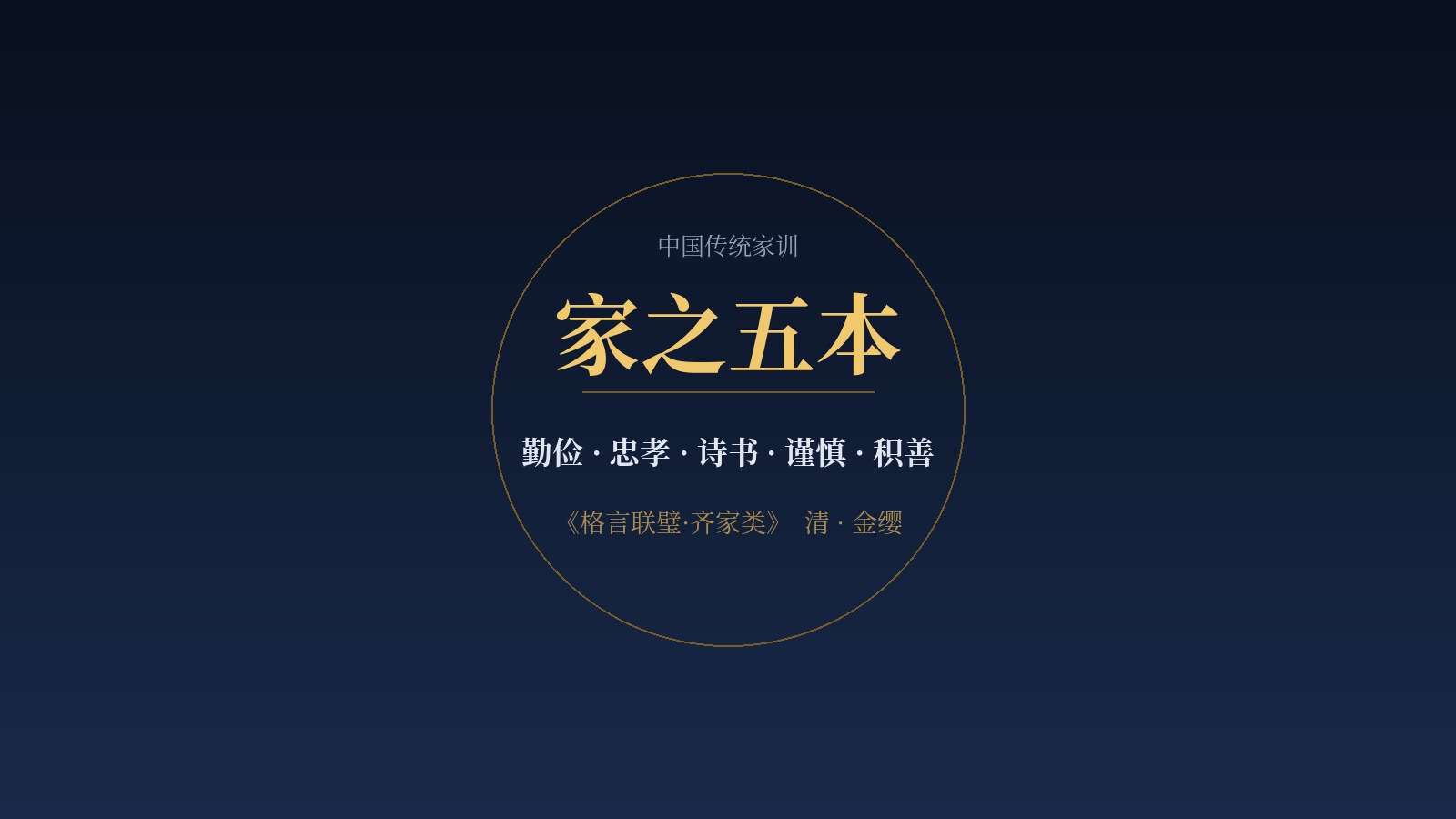
Chinese family precepts rarely preach. They are a few lines short enough to memorise and pass on. One set — twenty characters — covers the whole arc: how a family stands, rises, holds and endures.
- Diligence and thrift are the root of running a household
- Loyalty and filial piety are the root of uniting it
- Prudence is the root of preserving it
- Books and learning are the root of raising it
- Good deeds are the root of carrying it onward
These five lines come from the Qing-dynasty *Geyan Lianbi* (Maxims in Couplets), compiled by Jin Ying, section on regulating the household. Online recitations often add 乃 and change 起家 to 兴家 — the meaning holds; 起 is about starting out, 兴 about flourishing.
1. These five are not a list — they are a timeline
Most people memorise the five as parallel maxims. Read in order, they describe five stages of one family — and the order cannot be shuffled.
- Thrift → run it: survive first. Without savings, everything else is talk.
- Loyalty → unite it: money alone does not hold people together; order does.
- Learning → raise it: once stable, there is room for study; study lifts the family.
- Prudence → preserve it: the higher you rise, the more you can lose.
- Good deeds → carry it on: what passes down is not money but reputation.
The order is worth pondering. Putting earning first is not naive moralising — without food, loyalty and learning are empty words. But putting good deeds last says something else: what decides how many generations a family lasts is not money but character.
2. Line by line: why these words
Thrift — running the house. Diligence opens the tap, thrift closes the leak. Together they create surplus. A family's real confidence is not one good year but ten consecutive years with something left over.
Loyalty — uniting the house. To unite is to pull in one direction: parents kind, children dutiful, spouses in accord. A house at war with itself cannot keep what it earns.
Learning — raising the house. The most modern line of the five: education is the channel for upward mobility. The imperial exams then, credentials and capability now — same mechanism: give the next generation a higher starting point.
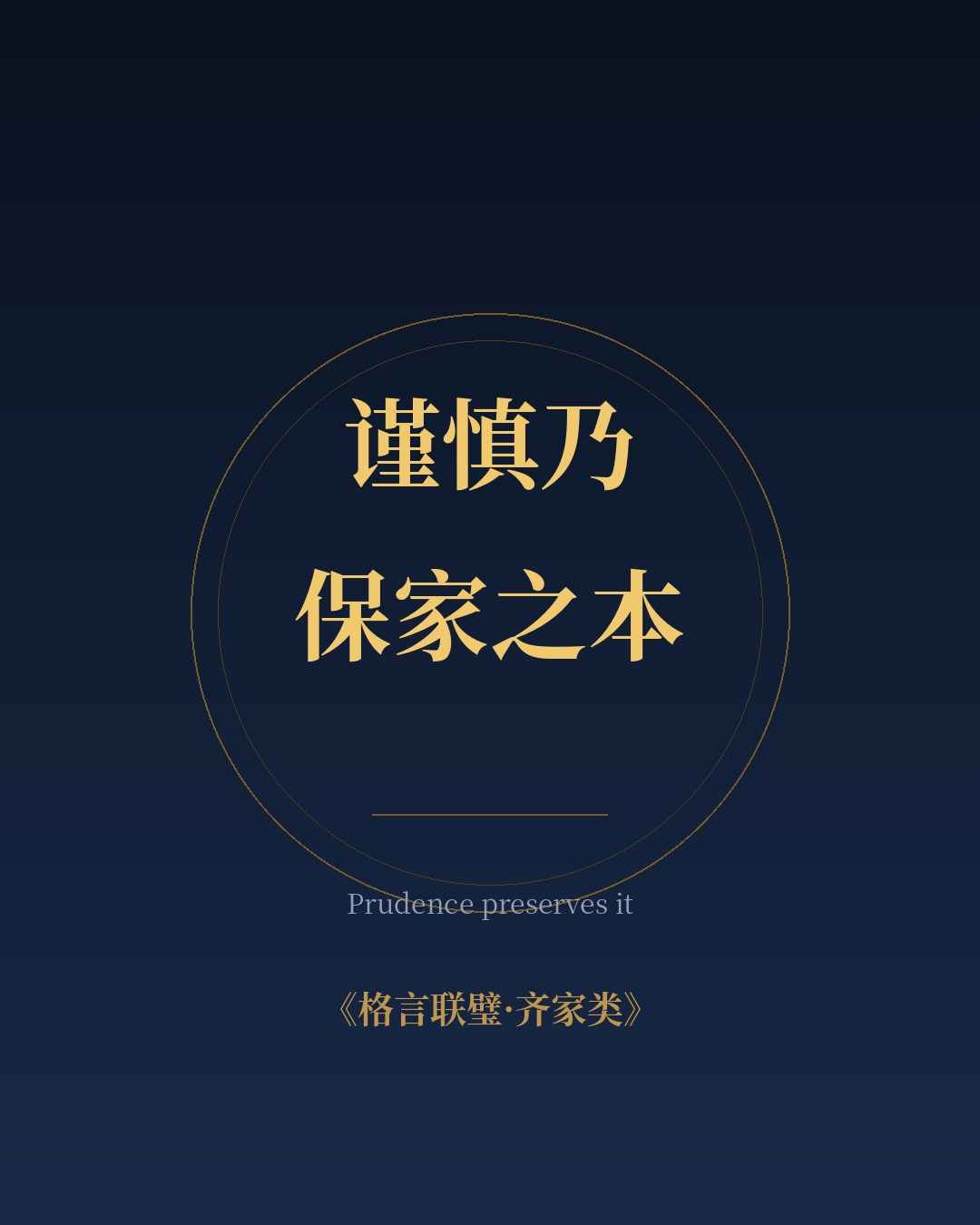
Prudence — preserving it. Unflattering but truest: keeping is harder than building. Building has one path; keeping has endless temptations — gambling, guaranteeing loans, reckless investment, flattery. There are far more ways to destroy a house than to build one.
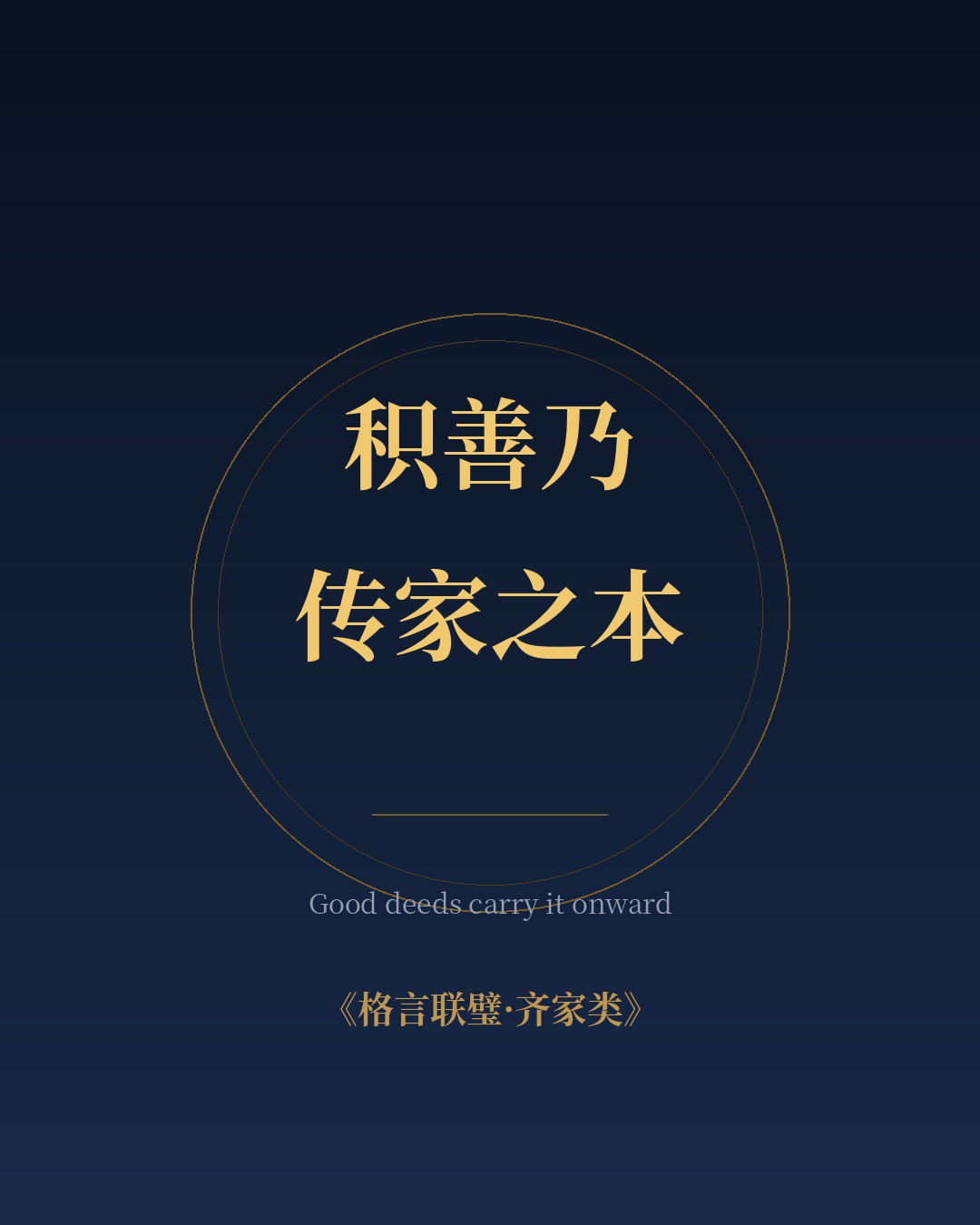
Good deeds — carrying it on. The most important line. Money rarely lasts three generations; character often does. What is left behind is a name, a network, the sentence “that family can be trusted.” When a child goes out and people say “he is from that family, you can trust him” — that is worth more than a house.
3. For a migrant family, these five weigh more
Many parents send children to Singapore thinking “give them a better education.” True enough — learning does raise a house.
But read the whole set: education ranks third. Before it come thrift and loyalty; after it, prudence and good deeds.
In other words: sending a child abroad is the “rising” step. Whether a family stays united, holds together and endures depends not on the school but on what happens at home.
This is the clearest divide I have seen in Singapore: same schools, same grades — some children grow steadier, others drift. The difference is rarely intelligence; it is whether the home has these five things.
In closing
Twenty characters say more than many books on family education: survive, pull together, rise, do not fall, and leave behind something longer-lasting than money.
Worth copying out and putting on the wall — not for children to memorise, but for the adults to see every day.
Source note: the five lines are quoted from a WeChat Channels post by “Beibei Shuxiang” (11 May 2026) as a starting point. The original text is from Jin Ying's *Geyan Lianbi*, Qing dynasty; wording has been checked against the source (「诗书起家之本」; the video uses 兴家). Card images are produced in-house. Views and further analysis are written independently and do not represent the video author.
Singapore's education, culture and family, tracked
We keep collecting traditional wisdom and education observations worth reading.