Agritech · 24 Oct 2026
What Hemp Seed Really Is: Composition, Nutrition, Benefits and Who Should Eat It
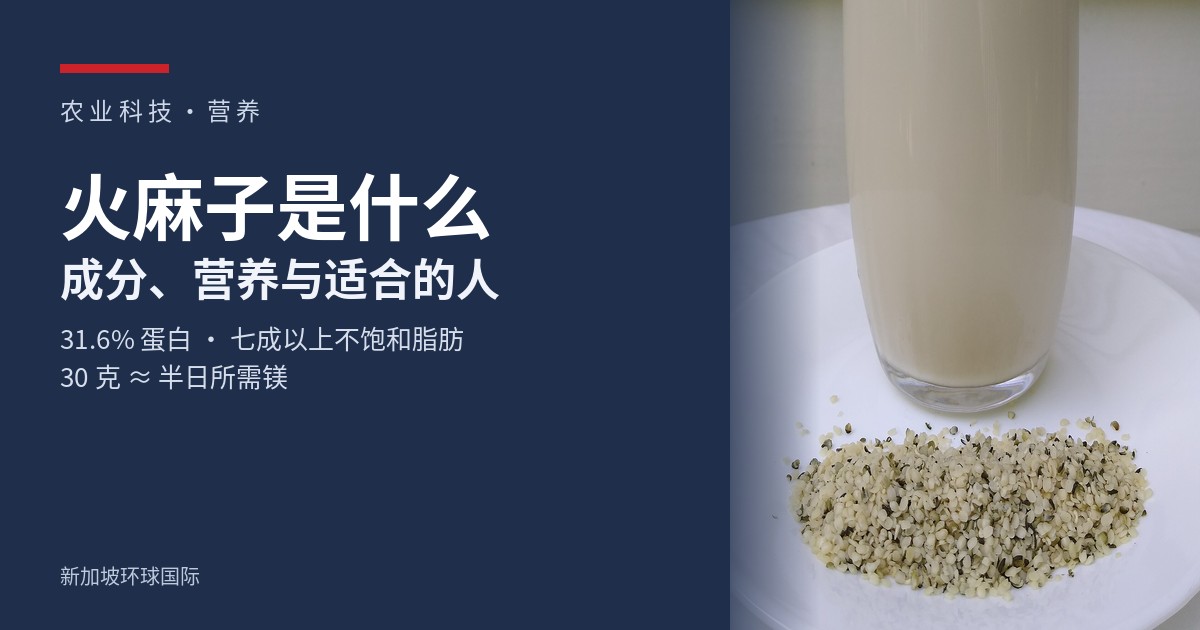
A video about the hemp business raises a more basic question: what is hemp seed, really? 31.6 g protein per 100 g, over 70% unsaturated fat, and half a day’s magnesium in a 30 g serving — composition, effects and who it suits.
One Small Seed, Five Things Worth Getting Right
The video’s title is blunt: “A high-school dropout who weighed 300 pounds made $300 million selling this.” Its tags read business, money, weight loss, hemp. It tells the business story of a hemp-related product. One disclosure: the video carries no captions and we could not obtain a line-by-line transcript, so this is not a video summary. It answers the question behind the title — what hemp seed actually is, where its nutrition lies, what it can and cannot do for the body, who should eat it and who should not. The official player is embedded below; figures and claims in the film are the creator’s.
Three Names, One Seed
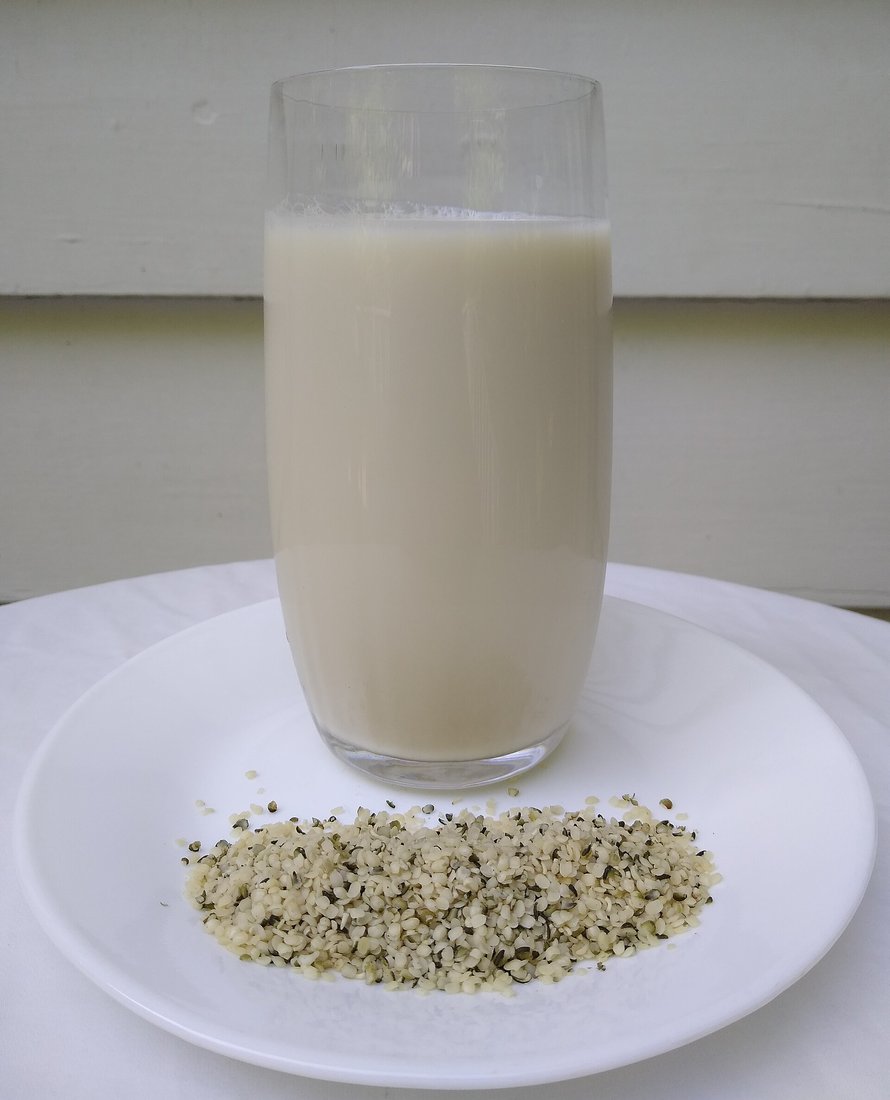
In Chinese, 火麻子, 火麻仁 and 大麻籽 are used interchangeably. 火麻子 usually means the mature fruit of the hemp plant (an industrial Cannabis variety), hull on; the hulled kernel is 火麻仁 — hemp seed or hemp hearts — the pale, slightly sesame-sized grains with a nutty bite sold in shops. The 火麻仁 in a Chinese pharmacy is the same drug. It belongs to the same species as high-THC cannabis but a different variety: food and medicine use industrial hemp with very low THC, and legal limits apply to finished products. Note also that CBD comes from flowers and leaves, not from seed — so “hemp seed contains CBD” is simply wrong.
Composition: Four Things in One Small Seed
1. About 30% protein — and a complete protein
Per the USDA food database, hulled hemp seed contains about 31.6 g of protein per 100 g — close to soybean and far above almonds or walnuts. Its main storage proteins are edestin and albumin, and it supplies all nine essential amino acids, with a notably high share of arginine (about 13% of the protein). Its weak points are lysine and tryptophan, so it works best as part of a plant-protein mix rather than the sole source.
2. About half is fat — over 70% of it unsaturated
It holds about 48 g of fat per 100 g. Polyunsaturated fatty acids make up more than 70% of that: linoleic acid (omega-6) about half, alpha-linolenic acid (omega-3) roughly 15–20%, a ratio near 3:1 — the range nutrition science usually calls ideal — plus oleic acid and a little gamma-linolenic acid. Both linoleic and alpha-linolenic acid are essential: the body cannot make them. The calories come from here too: about 553 kcal per 100 g, and about 166 kcal in three tablespoons (30 g).
3. Very low carbohydrate — fibre depends on the hull
Hulled hemp seed carries about 8.7 g of carbohydrate per 100 g, of which about 4 g is fibre; whole unhulled seed is much higher in fibre. It is barely sweet and low in glycaemic load, which makes it a useful swap for part of the snacks or breadcrumbs in a diet that is watching refined carbohydrate.
4. Mineral density that stands out among seeds
Three tablespoons (30 g) supply magnesium 210 mg (about half the adult daily reference intake), manganese 2.28 mg, phosphorus 495 mg, copper 0.48 mg, zinc 2.97 mg, iron 2.38 mg, potassium 360 mg and vitamin B1 0.38 mg. For anyone who eats little meat or few dark green vegetables, that is an easy gap to close.
What It Can Do for the Body — and How Far the Evidence Goes
- Plant protein. A complete amino-acid profile at roughly 30% protein makes it an efficient ingredient for vegetarians, people who eat little meat, and adults trying to raise protein intake.
- Replacing saturated fat. Swapping part of the butter, cream or fatty meat for hemp seed lowers saturated fat and raises unsaturated fat in the diet. That swap is associated with better blood lipid profiles — an effect of the overall diet, not a drug-like property of the seed.
- Easing constipation. Fibre plus fat helps dry, hard stools; traditional Chinese medicine already uses 火麻仁 as a moistening laxative for constipation from dryness. The condition is drinking enough water — fibre without fluid makes matters worse.
- Dry skin and premenstrual breast tenderness have small trials behind them, but the samples are small and short — preliminary signals, not promises.
- Weight management. High protein and fat give decent satiety and it works as a snack substitute, but calorie density is high: handful after handful turns weight loss into weight gain. The “weight loss” tag on the video should be read as substitution, not as a food that makes you thin.
To be clear: the above is nutrition science and preliminary research, not medical treatment. Hemp seed does not treat hypertension, diabetes or cancer, and replaces no prescription drug. Treating it as a “superfood” to be eaten in quantity every day is neither necessary nor safe.
Who It Suits
- Vegetarians and people who eat little meat: the most direct way to add protein, iron and zinc.
- People training, building muscle or managing weight: stirred into yoghurt or oats after training, it is cleaner than a protein bar.
- Older adults prone to constipation: start small, with plenty of water.
- People who chew poorly: ground into porridge or soft rice, easier to swallow than whole seeds.
- Office workers who want to swap the afternoon biscuit for something that keeps them full.
Who Should Be Careful
- Anyone with diarrhoea or loose stools: hemp seed moistens the bowel and will loosen them further.
- People allergic to seeds or nuts: hemp is not a common allergen, but the first try should still be a very small amount.
- People on anticoagulants or antiplatelet drugs, or facing surgery soon: the omega-3 dose is modest, but tell your doctor.
- Pregnancy and breastfeeding: traditionally considered bowel-loosening, with limited modern safety data — ask a doctor first.
- Athletes subject to strict drug testing: risk from properly hulled product is very low, but there is no need to take the uncertainty.
- Anyone dieting: this is an oilseed, not an all-you-can-eat health snack.
How to Eat It, How Much, How to Store It
- Amount: 15–30 g a day (about 1–3 tablespoons) is enough for most adults; start at 10 g and let the gut adjust.
- Ways to eat: sprinkled on yoghurt, oats or salad; ground into porridge; blended into a smoothie with banana; substituted for part of the flour in baking.
- Do not fry it hard: alpha-linolenic acid dislikes heat, and smoking-hot oil burns away the most valuable part.
- Storage: refrigerate after opening, keep dark and sealed, buy small packs; a paint-like or bitter smell means it has oxidised — discard it.
- TCM use is separate: 火麻仁 is typically decocted at 10–15 g, crushed and added late — a medicinal dose prescribed by a TCM practitioner, not something to double on your own.
Hemp seed is not a medicine and not a miracle food. It is an oilseed with high nutrient density: in the right place it fills a gap in an ordinary diet; in the wrong place it is just a few hundred extra calories.
Sources: USDA FoodData Central, “Seeds, hemp seed, hulled” (FDC 170148), and the same dataset as republished by NutritionValue.org (per 30 g and per 100 g); peer-reviewed reviews of hemp-seed fatty-acid composition (over 70% polyunsaturated, linoleic to alpha-linolenic about 3:1); the traditional bowel-moistening use follows the general entry for 火麻仁 in the Chinese Pharmacopoeia. For the video we cite only its public title and tags; we do not retell its content. This is nutrition education, not medical advice — if you have a chronic illness, take medication, are pregnant or breastfeeding, consult a doctor or dietitian first.
Working on an Agricultural or Food Product?
Singapore Global International’s AgriTech unit works on agricultural product development, supply chains and food & wellness products. Contact us to talk.