Agritech · 24 Oct 2026
Sixty seconds seen by 6.86 million: how a cucumber gets grafted onto squash roots
An agricultural clip with no narration and no faces — and what a pair of hands is doing
A clear plastic tube that swaps the roots
This is a 60-second vertical video posted on 15 September 2026. It has passed 6.86 million views and 24,000 likes. Its title is plain: Cucumber grafting techniques.
1. What is actually on screen
The video is shot vertically, and the cover uses a familiar trick: a sharp vertical strip in the middle, with a blurred, enlarged copy of the same scene filling the sides so the vertical frame fits a landscape canvas. In that central strip a green cucumber hangs from the vine, its middle cinched tight by a white band that leaves a visible groove — the tie that holds a graft.
Later shots are three-panel close-ups stitched together: one hand holds a short length of clear plastic tubing, the other grips a silver pair of shears or a grafting knife, tip down, close to a small, warty cucumber. Yellow flowers and curling tendrils sit nearby; the background is a mass of dark green leaves under soft, even light — unmistakably a greenhouse.
One frame shows three pale green cucumbers hanging from the vine, flanked left and right by enlarged gourd shapes at visibly mismatched scale — a post-production composite made for visual punch. There is no narration, no subtitles, no close-up of a face: only a pair of hands and a few cucumbers.
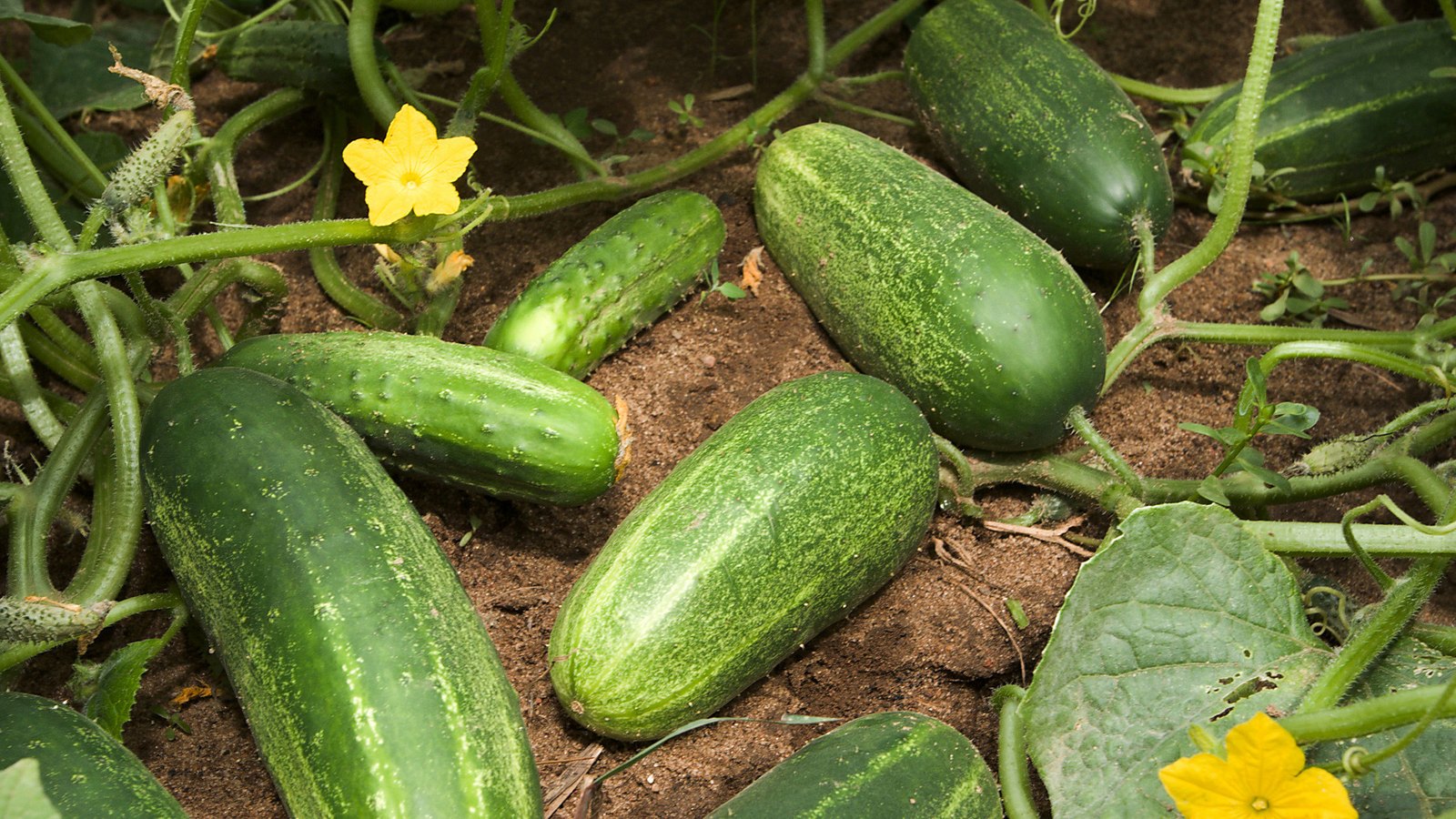
2. What it is doing: putting a cucumber on someone else's roots
Cucumber grafting does something simple: the cucumber (scion) is joined onto the roots of another cucurbit (rootstock) — a vigorous top on a disease-resistant bottom. Squash, bottle gourd and calabash are the usual rootstocks. The clear plastic tube in the video is the “tube grafting” clip common in commercial nurseries: align the cuts, slip the tube over the union and hold it until the wound heals.
Why the extra step? Mainly soil-borne disease. One of the cucumber's worst enemies is Fusarium wilt, caused by *Fusarium oxysporum*: it survives in soil for years, enters through the roots and blocks the water-conducting vessels, so the plant wilts from the top down. And that disease is, precisely, a problem of the roots.
Use a resistant root and the problem is sidestepped. A Chinese study grafting the cucumber variety Jinyan No. 4 onto four cucurbit rootstocks found that bottle gourd, black-seed squash and winter melon all worked: graft take was above 98%; under inoculation with Fusarium wilt and Phytophthora blight, grafted plants survived about 20 percentage points better than ungrafted ones and yielded more than double, with no effect on fruit quality.
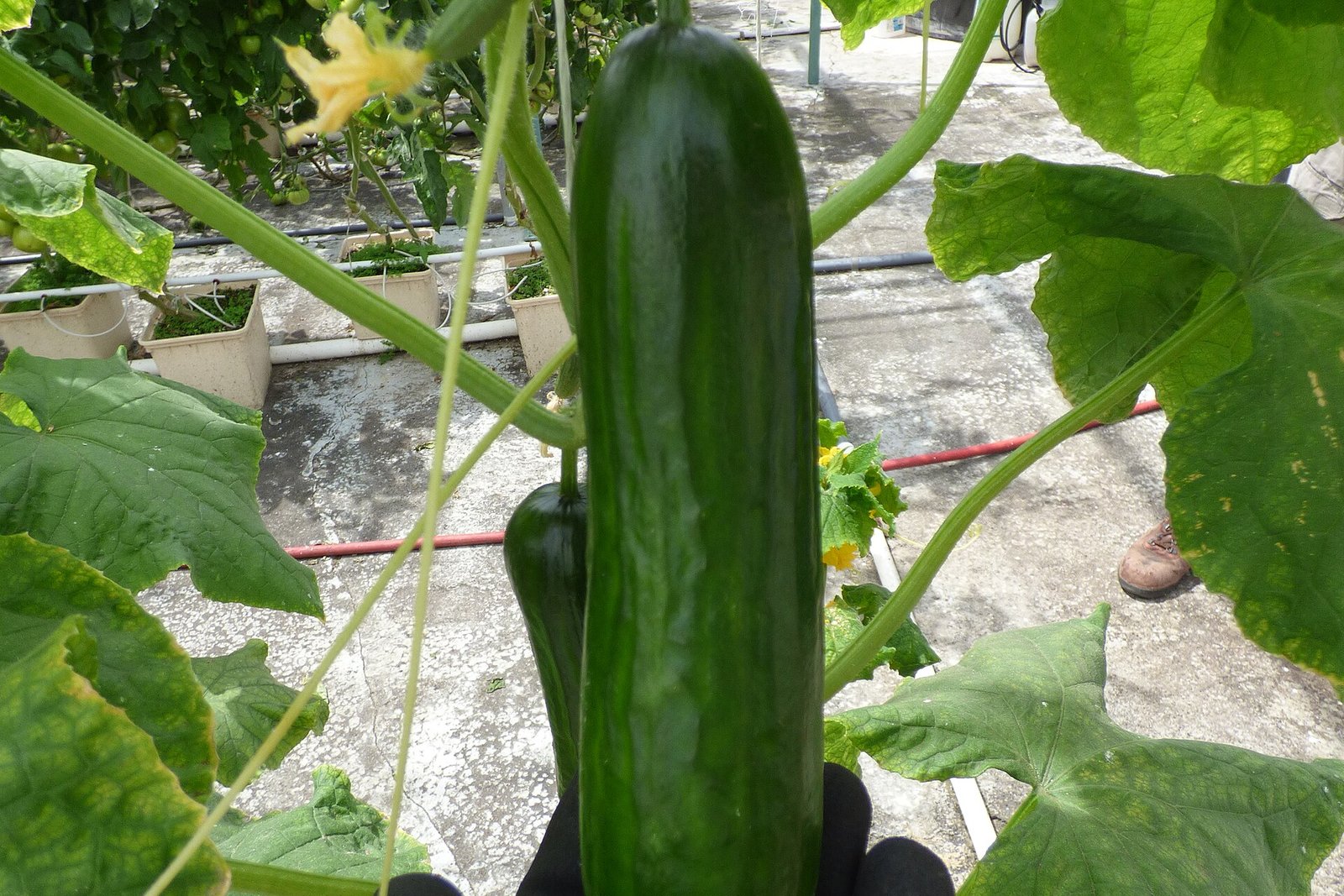
3. My take
First, “smart agriculture” has been framed too narrowly. Say “agritech” and the images that come up are drones, sensors, dashboards and data platforms. This clip is a reminder that what actually decides a season's harvest is often what two hands do — whether the cut is clean, whether the clip sits straight, whether humidity holds through healing. Those unglamorous, unphotogenic moves are the first line of defence.
Second, grafting is disease resistance without genetic modification. Not a single gene is changed; only the roots are swapped. Watermelon growers in Japan and Korea were doing this in the late 1920s, and Asia remains the region where grafted vegetables are most widespread. Technically it is almost homely; in effect it is immediate — a reminder that innovation does not always look like innovation.
Third, why it travels is worth studying. Sixty seconds, one action, one result, no explanation, just hands. The usual mistake in agricultural content is explaining first; this clip does the opposite — show the hand doing the thing, and the viewer supplies the curiosity. Those 6.86 million views are not a science lesson; they are a visible action.
Fourth, technology has to fit the setting. Grafting's biggest payoff is against soil-borne disease — and Singapore's hydroponic and substrate systems are not grown in soil at all, so the return on that step is much smaller here. Working on agritech locally, the better question is: what class of problem does this solve, and is that problem still present in our setting? Copying a practice that doubles yield in a Shandong greenhouse into tropical hydroponics may simply add a cost.
Source note: this piece is based on the video's public title, description and still frames; the technical background on grafting is drawn from published cucumber rootstock studies (survival and yield data under Fusarium wilt and Phytophthora blight) and cucurbit grafting reviews. No video footage has been reproduced; the images are licensed Wikimedia Commons files, credited above. Original video: https://youtube.com/shorts/6QYSf8YDiW4
Looking for agritech that fits local conditions?
Urban farming, hydroponics and supply chains — happy to share the cases and pitfalls we have seen.