Education · AI
Talking AI agents with home-educating families
Notes from an online session: the three worries parents raised, three uses we demonstrated, the peers and external standards AI cannot replace, and four rules to start with.

Recently I joined an online session with a group of home-educating families in China. The screens were not tidy: a child doing homework at one side, a cat on someone's lap, someone stepping away to turn off the stove. The topic was meant to be how to use AI agents; halfway through it became how children should use them.
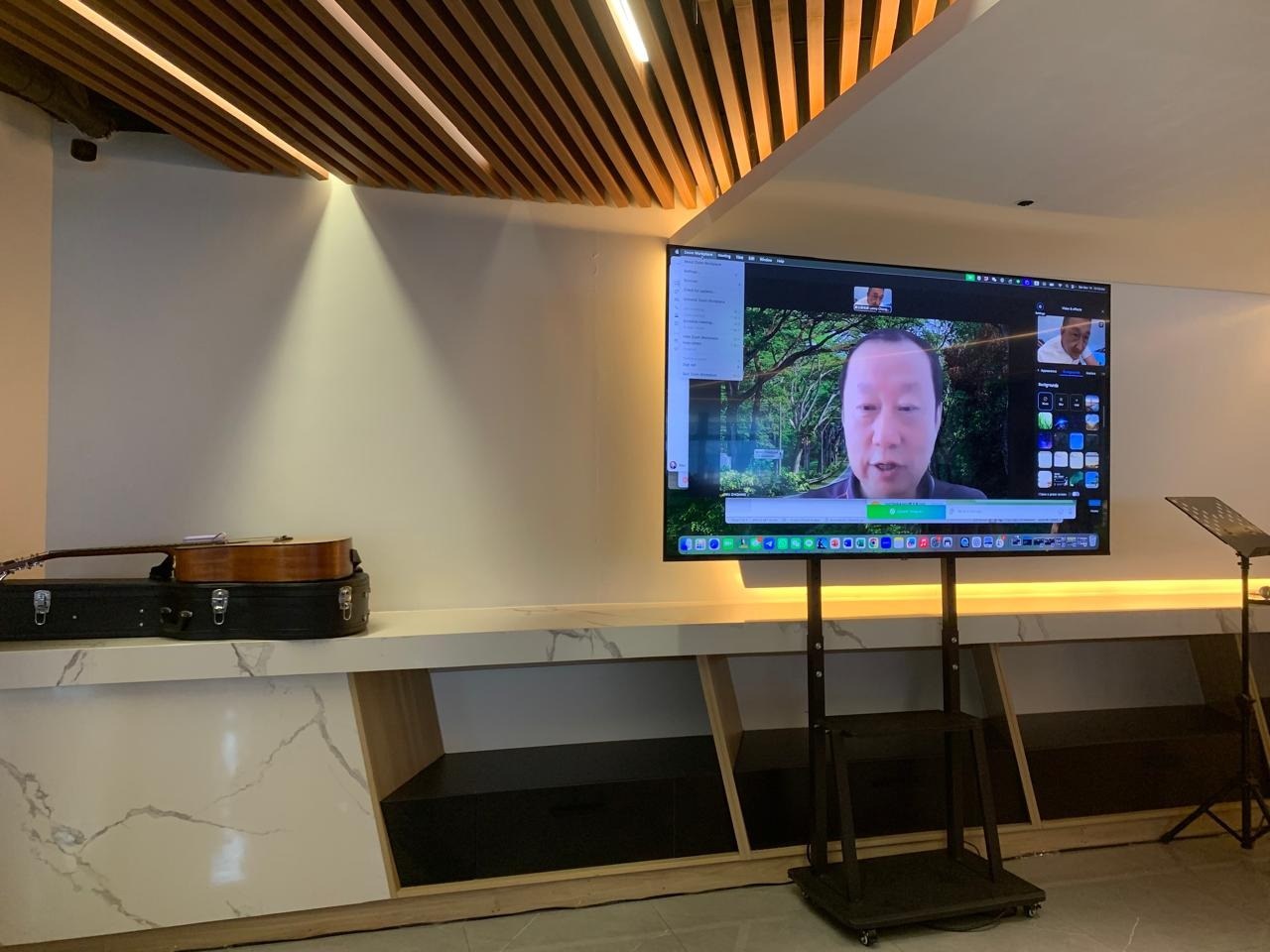
Home education is not the mainstream route in China — school registration, progression and materials are handled differently in every household. What these families share is a reluctance to take “standardised” on trust, and a willingness to carry more themselves.
That is also why their attitude to AI was calmer than I expected. Not excitement first, but risk first.

1. The three things parents worry about
First, ghostwriting. Will the child simply hand the assignment to a machine? My answer: the problem is not the tool but the rule. The AI may ask questions but must not produce the finished piece; afterwards the child has to explain it without notes. If they cannot, it is rewritten. Without that rule holding, no tool should be given to a child.
Second, truth. An AI can sound entirely convincing and still be wrong — wrong in a way that looks right. That is exactly what home education lacks most: not knowledge, but external checking. So require a source for every claim: which book, which page, which site. If it cannot be pointed to, it is not learned.
Third, parents not knowing how to use it themselves. My advice is plain: take the one chore you dislike most and try it for two weeks, then hand it to the child. If the adult does not use it, the child only learns to ask once and take the answer.
2. Three things we demonstrated
One: breaking a large topic into a week. Take ancient Rome — what to read, watch and do each day, and how to tell whether it has been learned. The AI produces a first version; the parent edits it. The editing is the teaching.
Two: working through wrong answers. Sort the mistakes on one paper, generate similar questions, retest a day later. A machine does not tire of repetition, and here it is more patient than a person.
Three: bilingual side-by-side. Split an English science article paragraph by paragraph, set the two languages in parallel, list the unfamiliar words separately. For parents whose English is not strong, this saves lookup time, not comprehension time.
One small example. A child asks why the sky is blue, and the AI explains Rayleigh scattering in one breath. Do not stop there: ask which book and which page that explanation comes from, find the book, and read the passage aloud. What the child remembers is not “blue” but “answers are supposed to have a source”.
The three share one trait: repetitive, rule-bound, checkable. An AI does them faster than a person. But the judgement of whether the child actually understood still belongs to the person sitting beside them.
3. What AI cannot fill
The strength of home education is individual attention; the weakness is peers and an external standard. An AI can fill some of it: a practice partner and feedback at any hour. It cannot supply friction with peers, being required by a real teacher, or finding one's place in a group.
So I told them: do not treat AI as a replacement teacher. Treat it as one more teaching assistant. An assistant does not decide what to teach.
4. Four things to start this week
One: set the rule — no ghostwriting, questions only, and the answer must be explainable without notes. Two: demand sources — every claim points to a page or a link, or it is dropped. Three: a weekly review — ten minutes in which the child teaches the parent what was learned. Four: the parent goes first — two weeks of personal use before handing it over.
Near the end someone asked: a child taught this way — will they keep up if they return to the school system? I cannot promise that for anyone. What I can say is that tools do not decide the purpose of an education; they only amplify the judgement of the educator. Where the judgement is clear, AI makes a family faster. Where it is vague, AI only makes things easier — and shallower.
Want to try a setup for your child?
WhatsApp +65 8134 8593 — start with one concrete scenario.