Education · AI course · 24 Nov 2026
No age gap, only willingness
On 23 and 24 November, teachers of 金吉教会幼稚园 and students of the Chinese Church Union Singapore (新加坡华文基督教联合会) sat at the same tables to learn AI Agents. The oldest were born in the 1950s, the youngest in the 1970s. Two days made one thing plain: whether you can learn this has little to do with age.
Two days, one table
Two days in a small classroom. Five people around a white table, two laptops, a phone, a television mirroring the screen. No mountain of handouts; mostly people leaning over the same screen, arguing about how a sentence should be written and where a step belongs.
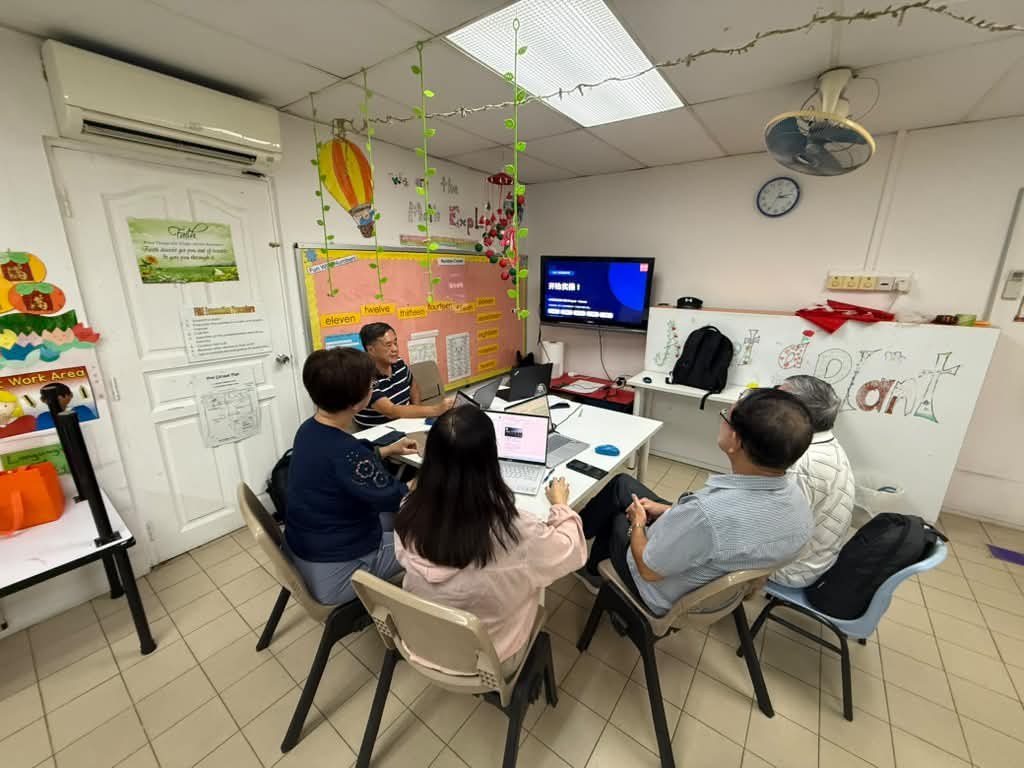
Three generations at the table
Half the class were kindergarten teachers, half were students of the Singapore Chinese association. Birth years ran from the 1950s to the 1970s — more than twenty years apart, and a wholly different upbringing: some had no personal computer when they were young, others grew up with a phone in hand.
The usual assumption is that such a class sorts itself out by age: the young learn fast, the older ones trail behind, and a few youngsters end up tidying up after their elders. Over two days, that is not what happened.
No tech gap — only different questions
What separates people is not whether they can handle a mouse, but what they do first when something does not make sense. Younger learners click through and back out if it breaks. Older learners ask why the step exists at all, and only then move.
The first is fast, the second steady. Teaching AI Agents needs both: speed to try, steadiness to judge whether what came out is usable. The most common scene of the two days was younger hands on the keyboard and older voices correcting the direction — “will it actually do what this sentence says?”, “who is going to read this output?” Those are not technical questions. They are questions of experience.
What older learners bring that no textbook does
First, context. Kindergarten teachers know what parents actually ask, how far a notice must go before it is understood, where misunderstandings start. No course teaches that; it accumulates over years at the classroom door. With AI, writing is the easy part — knowing what to write is not.
Second, judgement. What AI produces looks presentable — fluent sentences, tidy formatting, errors buried politely. Younger users tend to trust first and use later; older ones check before they believe. Being hard to persuade turns out to be scarce in the AI era.
Third, no fear of asking. The bluntest questions in class usually came from the oldest. “I don’t follow, say it again.” “Why can’t we do it this way?” Younger learners worry about looking slow; older ones carry no such baggage. Treating “I don’t know” as normal speeds up any kind of learning.
Why kindergarten teachers should learn this first
Parents already use AI for notices, feedback and progress notes, and children meet screens earlier every year. A teacher who has no idea how these tools work cannot tell whether the paragraph a parent sent was written with care or generated in one click — nor explain to a child what the talking thing on the screen actually is.
Learning first does not mean using it. After learning you can still choose not to; without understanding, you have no choice at all. That is why teachers and students sat in one room: not two tracks, but one class, filling each other’s gaps.
Three answers to “I’m too old for this”
First, the tools have lowered the bar a long way. Learning AI Agents today needs no code and no programming language — it needs plain speech: state the task clearly, order the steps. Someone who has taught for thirty years is better at that than a fresh graduate.
Second, learning slowly is not failing to learn. Nobody was left behind in two days because of age; the only ones left behind were those who stopped. Slower, asking twice, understanding every step — that usually produces something sturdier.
Third, experience is a starting line others do not have. Age, gender and occupation are no reason to refuse a new technology; they are the capital for overtaking on the bend: you know where things jam in the real world, and that is precisely what AI lacks.
Two days end; the television goes dark, the tables go back to normal. Whether those workflows get used will show in the coming weeks. But one thing was already clear by the first morning: the people at that table were twenty-odd years apart in age, and barely distinguishable in how they learned.
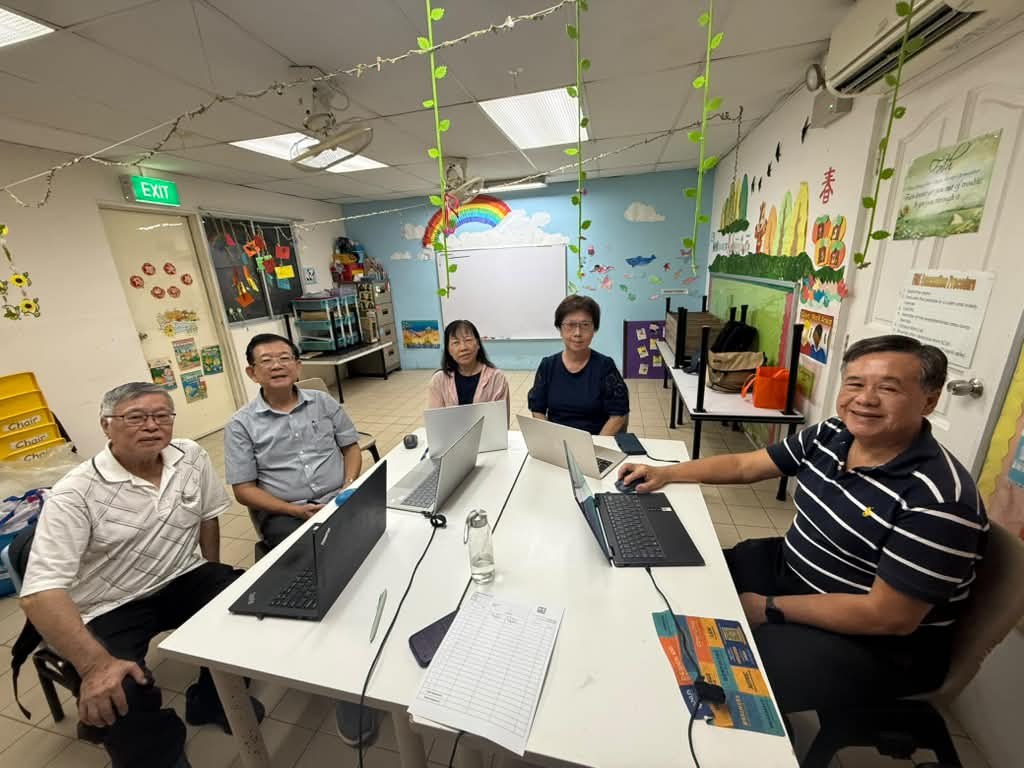
Note: this article is based on observation of the class on 23–24 November 2026. No individual’s words are quoted and no headcount or outcome data is claimed; the photo was supplied by the reader.
About us
Singapore Global International: international education and local settling-in.